
Every year, millions of Muslims travel to Makkah with the hope of worshipping Allah and drawing closer to Him. Some travel to perform Hajj, while others make the journey for Umrah.
Both are important acts of worship in Islam. Both involve visiting the Ka'bah, entering the state of Ihram, performing Tawaf and walking between Safa and Marwah. However, Hajj and Umrah are not the same. They differ in their timing, rituals, requirements and religious status.
If you are planning your first pilgrimage or simply want to understand these two acts of worship, this guide explains the differences in simple terms.
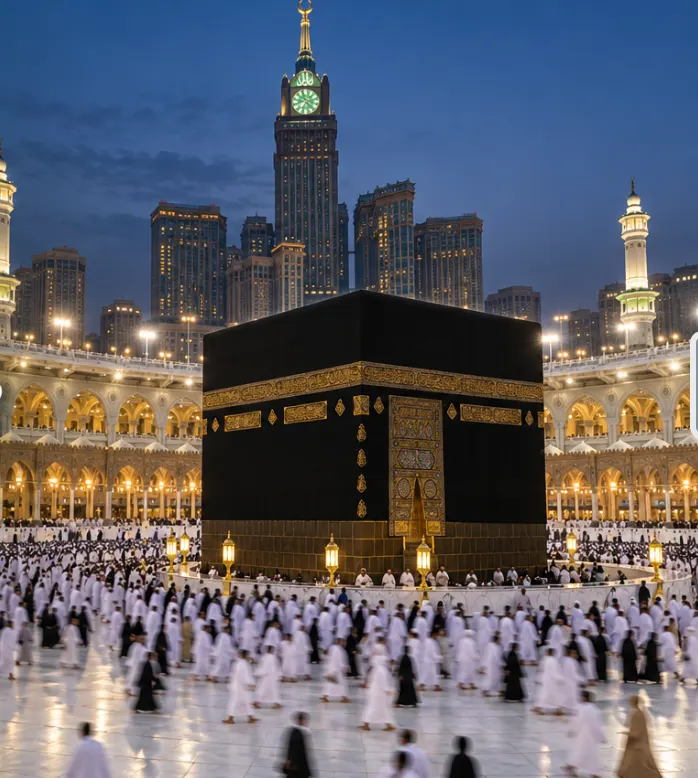
1. What Is Hajj?
Hajj is the annual pilgrimage to the Sacred House of Allah in Makkah. It is one of the five pillars of Islam and is obligatory once in a Muslim's lifetime for those who are physically and financially able to perform it.
Allah says in the Qur'an:
"And [due] to Allah from the people is a pilgrimage to the House – for whoever is able to find thereto a way."
Surah Aal-Imran, 3:97
Hajj takes place during specific days in the Islamic month of Dhul-Hijjah. Muslims from across the world gather in Makkah to perform its prescribed rituals.
One of the most important parts of Hajj is standing at Arafah on the ninth day of Dhul-Hijjah. The Prophet Muhammad ﷺ said:
"Hajj is Arafah."
Sunan Abi Dawud 1949
This Hadith highlights the central importance of the Day of Arafah in the pilgrimage.
What makes Hajj special?
- It is one of the five pillars of Islam.
- It takes place on specific days of Dhul-Hijjah.
- It brings Muslims from different countries together in worship.
- It involves several important rites, including standing at Arafah, staying at Muzdalifah and the prescribed rites at Mina.
- It teaches patience, humility, obedience and devotion to Allah.
Hajj is not simply a journey to Makkah. It is an act of worship that requires sincerity and following the guidance of the Prophet Muhammad ﷺ.
2. What Is Umrah?
Umrah is a pilgrimage to the Sacred Mosque in Makkah that can be performed throughout the year. Unlike Hajj, it does not have a fixed set of days.
Umrah is sometimes called the lesser pilgrimage, but this does not mean it is unimportant. It is a valuable act of worship through which Muslims seek the forgiveness and mercy of Allah.
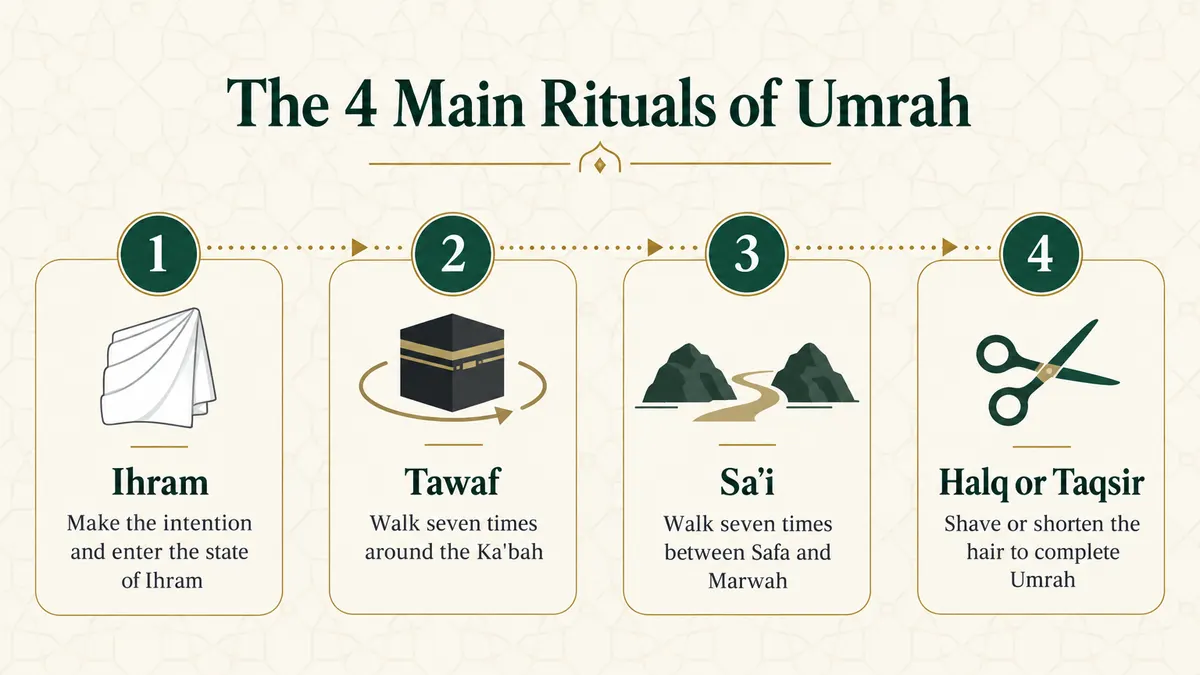
The main rituals of Umrah
- Entering Ihram: The pilgrim makes the intention to perform Umrah and enters the prescribed state of Ihram.
- Tawaf: The pilgrim walks seven times around the Ka'bah.
- Sa'i: The pilgrim walks seven times between Safa and Marwah.
- Shaving or shortening the hair: The pilgrim shaves the head or shortens the hair, completing Umrah and leaving the state of Ihram.
These rituals follow the practice of the Prophet Muhammad ﷺ. Pilgrims should learn their proper method before beginning their journey.
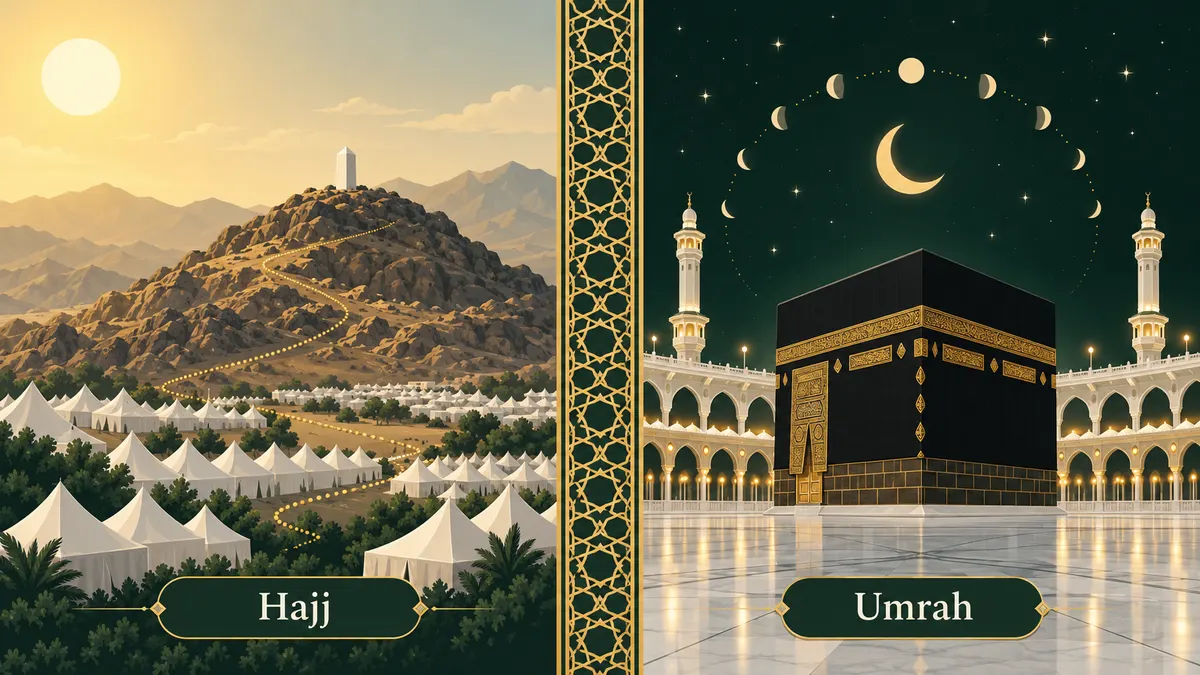
3. Hajj and Umrah: What Are the Main Differences?
Although both pilgrimages share some rituals, there are important differences between them.
| Point of comparison | Hajj | Umrah |
|---|---|---|
| Religious status | One of the five pillars of Islam; obligatory once for those who meet its conditions | A prescribed act of worship; scholars differ on whether it is obligatory or Sunnah |
| Timing | Specific days of Dhul-Hijjah | Throughout the year |
| Duration | Several days | Usually a few hours, depending on circumstances |
| Main rituals | Ihram, Tawaf, Sa'i, standing at Arafah and other prescribed rites | Ihram, Tawaf, Sa'i and shaving or shortening the hair |
| Arafah | Standing at Arafah is essential | Not part of Umrah |
| Mina and Muzdalifah | Includes prescribed rites and stays connected with these locations | Does not include these rites |
The most important difference: Hajj includes standing at Arafah and other specific rites that are not part of Umrah. Umrah has fewer rituals and can be performed throughout the year.
4. Why Does Hajj Take Several Days?
Hajj involves visiting several locations around Makkah and completing specific acts of worship on particular days.
The main stages include:
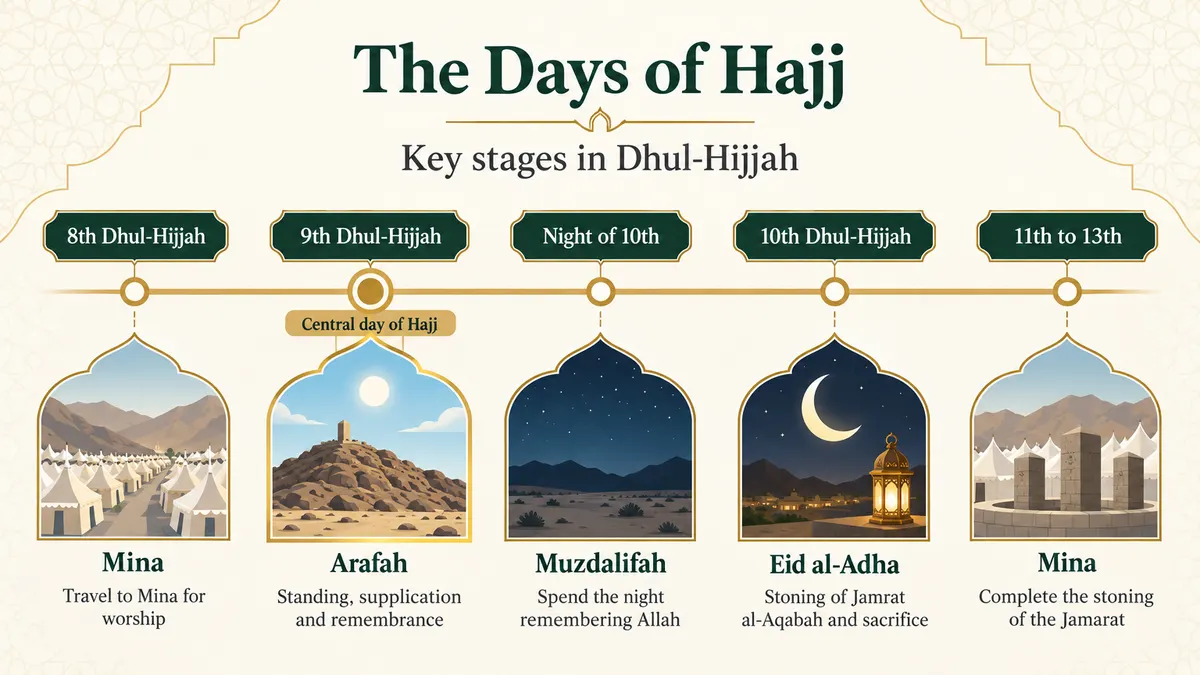
- 8th Dhul-Hijjah – Mina: Pilgrims travel to Mina and engage in worship and remembrance of Allah.
- 9th Dhul-Hijjah – Arafah: Pilgrims stand at Arafah, making supplications and remembering Allah. This is the central day of Hajj.
- Night of 10th Dhul-Hijjah – Muzdalifah: Pilgrims proceed to Muzdalifah, where they spend part of the night and remember Allah.
- 10th Dhul-Hijjah – Eid al-Adha: Pilgrims perform the prescribed rites, which include stoning Jamrat al-Aqabah. Those required to offer a sacrifice fulfil that obligation.
- Following days – Mina: Pilgrims complete the remaining prescribed rites of Hajj, including the stoning of the Jamarat.
The exact order and details of some rites vary according to the type of Hajj and the guidance of the Sunnah.
Umrah, on the other hand, does not involve these additional stages. Its main rituals take place at the Sacred Mosque and between Safa and Marwah.
5. Is Hajj Obligatory? What About Umrah?
Hajj is obligatory once in a lifetime for every Muslim who meets its conditions, including the ability to undertake the journey.
The Prophet Muhammad ﷺ explained that Hajj is required once, and that performing it more frequently is voluntary. This is reported in Sahih Muslim 1337.
What about Umrah?
Islamic scholars have differed on whether Umrah is obligatory or a strongly recommended act of worship. Some consider it obligatory for those who are able, while others consider it Sunnah.
It is important to understand that performing Umrah does not replace Hajj. If Hajj has become obligatory upon a Muslim and they are able to perform it, they must fulfil that obligation.
6. Can You Perform Umrah During the Hajj Season?
Yes. Umrah can be performed during the Hajj months as well as other times of the year.
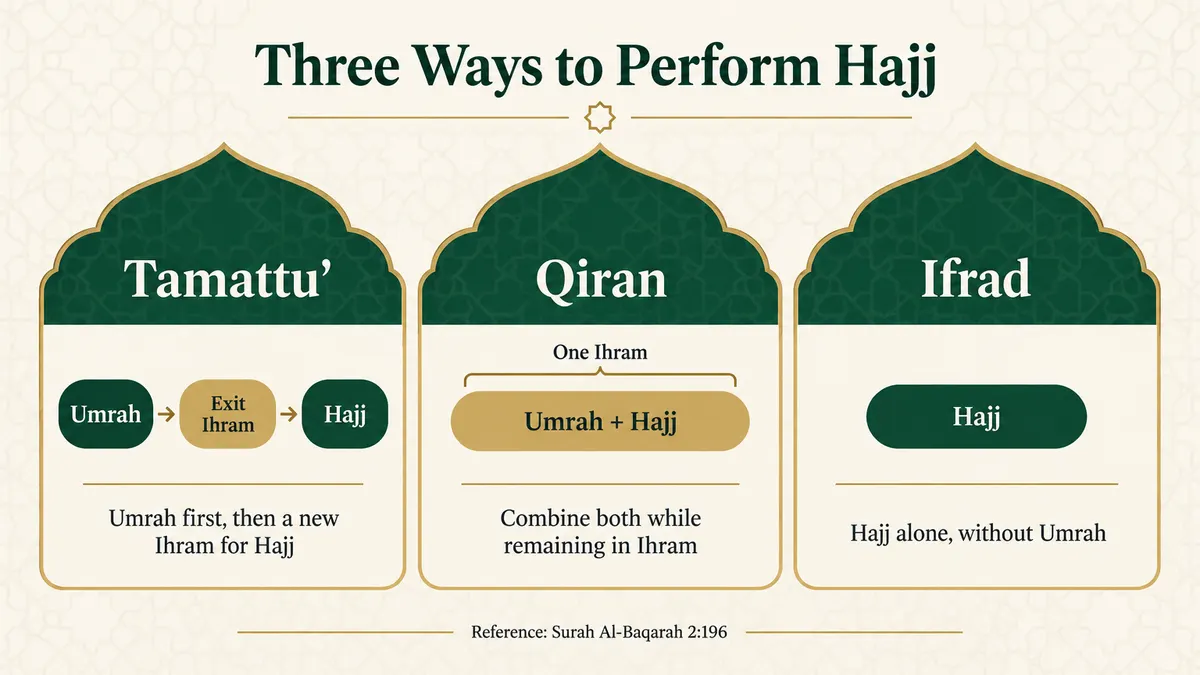
A pilgrim can also perform Umrah first and then perform Hajj during the same journey. This is known as Hajj Tamattu'.
There are three recognised ways of performing Hajj:
- Hajj Tamattu': Performing Umrah first, leaving Ihram, and then entering Ihram again for Hajj.
- Hajj Qiran: Combining Umrah and Hajj while remaining in Ihram.
- Hajj Ifrad: Performing Hajj alone without combining it with Umrah.
The Qur'an discusses the rules relating to Hajj and Umrah, including Tamattu', in Surah Al-Baqarah, verse 196.
7. Do Hajj and Umrah Replace Each Other?
No. Although both are pilgrimages to Makkah, they are separate acts of worship.
Here is what every Muslim should understand:
- Performing Umrah does not fulfil the obligation of Hajj.
- A person for whom Hajj is obligatory must still perform it when able.
- Umrah can be performed more than once.
- Hajj has specific dates and additional rites that are not part of Umrah.
Both offer Muslims an opportunity to worship Allah, remember Him and seek His forgiveness.
Final Thoughts
Hajj and Umrah share the same sacred destination, but each has its own requirements, timing and rituals.
Hajj is one of the five pillars of Islam and is obligatory once in a lifetime for those who are able. Umrah is a separate pilgrimage that can be performed throughout the year.
Understanding the differences is an important first step for anyone preparing for either journey. Before travelling, Muslims should learn the correct rituals and prepare to perform them according to the Qur'an and authentic Sunnah.
May Allah make it easy for every Muslim to visit His Sacred House, perform their pilgrimage correctly and accept their worship. Ameen.