
Salah is one of the most important acts of worship in Islam. It is more than a daily obligation; it is a direct connection between a Muslim and Allah. The five daily prayers give Muslims an opportunity to pause, remember their Creator, seek guidance, and find peace throughout the day.
For Muslims, Salah is not simply about completing five prayers. It is about building a relationship with Allah, developing discipline, and keeping faith at the centre of everyday life.

Why Is Salah So Important in Islam?
Salah is the second pillar of Islam and one of the first acts of worship Muslims will be questioned about on the Day of Judgement.
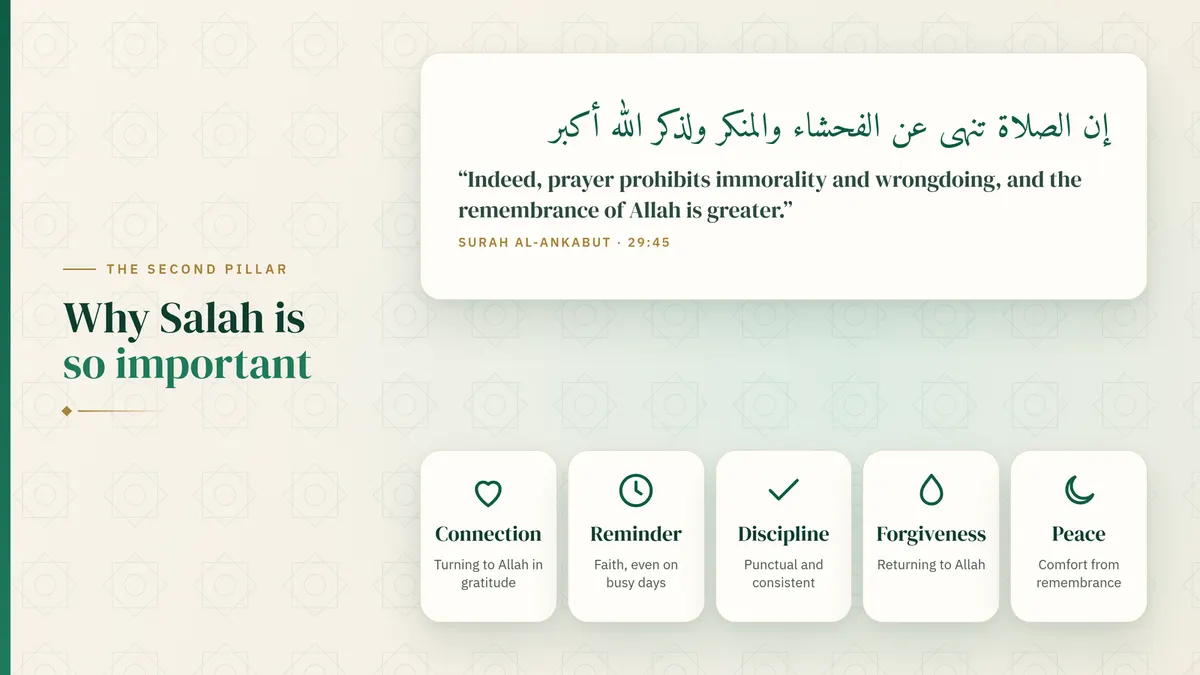
Allah says in the Quran:
"Indeed, prayer prohibits immorality and wrongdoing, and the remembrance of Allah is greater."
Surah Al-Ankabut, 29:45
This verse highlights that Salah should influence more than our prayer routine. It should also shape our behaviour, decisions, and relationships with others.
Here are some reasons why Salah holds such an important place in Islam:
- A connection with Allah: It allows Muslims to turn to Allah, express gratitude, and seek help and forgiveness.
- A reminder throughout the day: The five daily prayers bring our attention back to our faith, even when life becomes busy.
- A source of discipline: Praying at specific times encourages punctuality, consistency, and self-control.
- A way to seek forgiveness: Salah gives Muslims regular opportunities to repent and return to Allah.
- A source of peace: Taking time away from daily worries to remember Allah can bring comfort and reassurance.
The Five Daily Prayers and Their Purpose
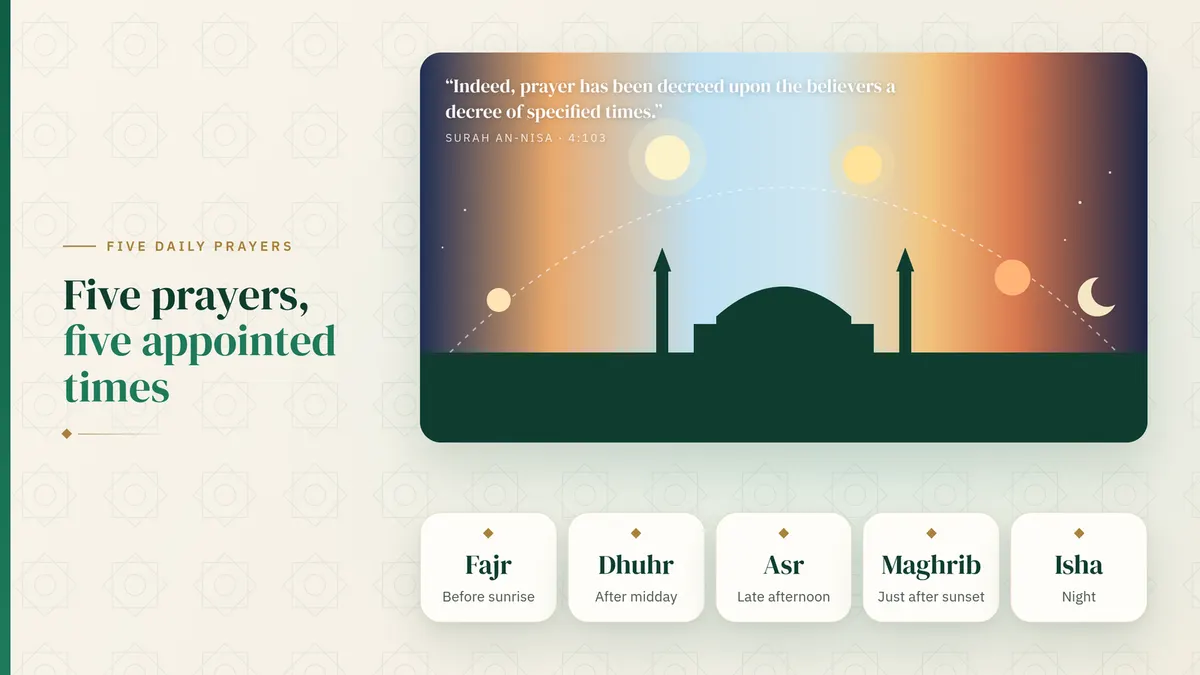
Allah has prescribed five daily prayers, each with its own time and significance:
| Prayer | Time |
|---|---|
| Fajr | Before sunrise |
| Dhuhr | After midday |
| Asr | Late afternoon |
| Maghrib | Just after sunset |
| Isha | Night |
These five prayers structure a Muslim's day around the remembrance of Allah. Whether someone is working, studying, travelling, or spending time with family, Salah provides regular moments to reconnect with their faith.
Allah says:
"Indeed, prayer has been decreed upon the believers a decree of specified times."
Surah An-Nisa, 4:103
How Salah Improves Our Daily Lives
The importance of Salah goes beyond its religious obligation. It also teaches lessons that Muslims can apply in their everyday lives.
- Patience: Salah reminds us to turn to Allah during difficult times rather than losing hope.
- Gratitude: It encourages us to recognise and appreciate the blessings Allah has given us.
- Humility: Standing before Allah reminds us that we are dependent on Him.
- Consistency: Praying five times a day develops a habit of keeping our commitments.
- Good character: Regular remembrance of Allah encourages us to avoid harmful actions and treat others with kindness.

Salah Is Also a Way to Seek Forgiveness
Every person makes mistakes, but Islam encourages Muslims to return to Allah and seek His forgiveness.
The five daily prayers provide regular opportunities to repent, reflect, and improve ourselves.
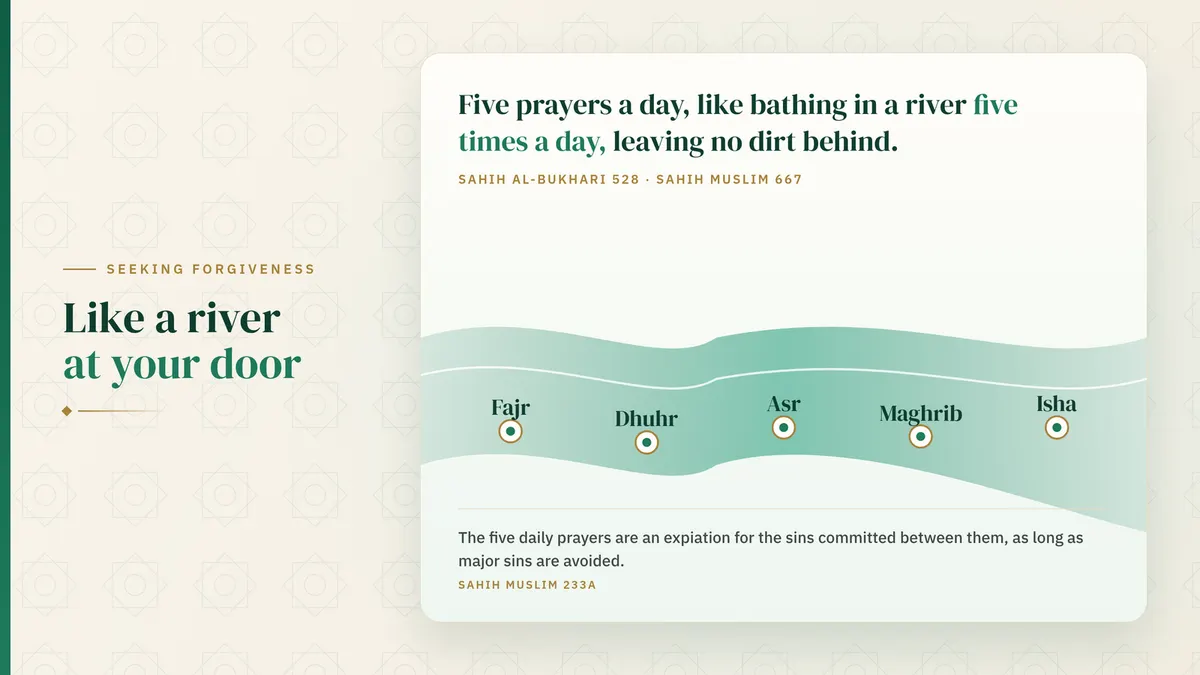
The Prophet Muhammad ﷺ explained the importance of the five daily prayers through the example of a river outside someone's home. If a person bathed in it five times every day, no dirt would remain on them.
Similarly, the five daily prayers serve as a means of cleansing a person's sins.
(Sahih al-Bukhari 528; Sahih Muslim 667)
The Prophet ﷺ also said that the five daily prayers are an expiation for the sins committed between them, provided major sins are avoided. (Sahih Muslim 233a).
How to Become More Consistent with Salah
For someone who struggles to pray regularly, building consistency can begin with small steps. A few simple habits can help make Salah a regular part of daily life.
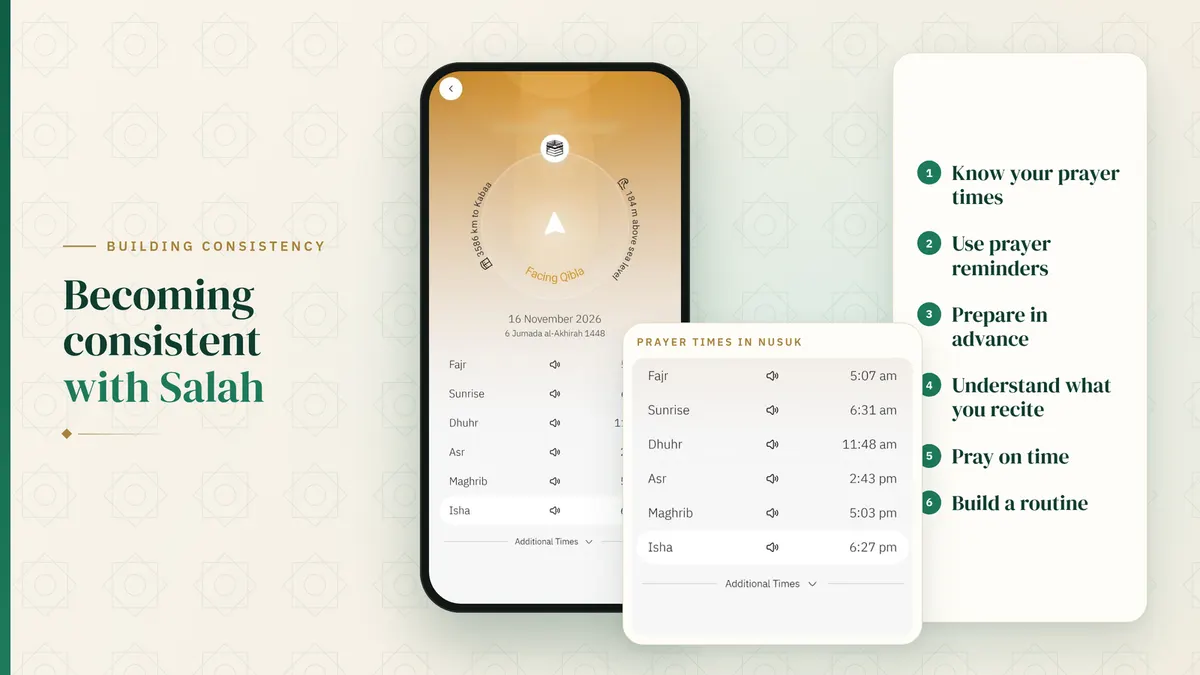
- Know your prayer times: Keep track of all five prayer times and plan your daily activities around them.
- Use prayer reminders: Set notifications to help you remember Salah, especially during busy days. The Nusuk app offers a daily prayer reminder feature that helps users stay informed about prayer times and receive timely notifications.
- Prepare in advance: Keep a prayer mat and suitable clothing accessible, especially when travelling or working outside.
- Understand what you recite: Learning the meaning of Surah Al-Fatihah and other recitations can help you become more mindful during prayer.
- Pray on time: Make an effort to perform each prayer within its prescribed time rather than continuously delaying it.
- Build a consistent routine: Focus on maintaining all five daily prayers and keep returning to your routine if you fall behind.
With a little planning and consistency, it becomes easier to make Salah an essential part of your everyday routine.
Make Salah a Priority, Not Just a Routine
Salah is one of the greatest gifts Allah has given Muslims. It offers an opportunity to step away from worldly distractions and remember what truly matters.
It is not simply about standing, bowing, and prostrating five times a day. It is about developing a connection with Allah that influences how we think, behave, and live.
Whether you are already consistent with your prayers or trying to improve your routine, remember that every prayer is an opportunity to reconnect with Allah.
Make time for Salah, because it is one of the most important ways to keep your relationship with Allah strong.