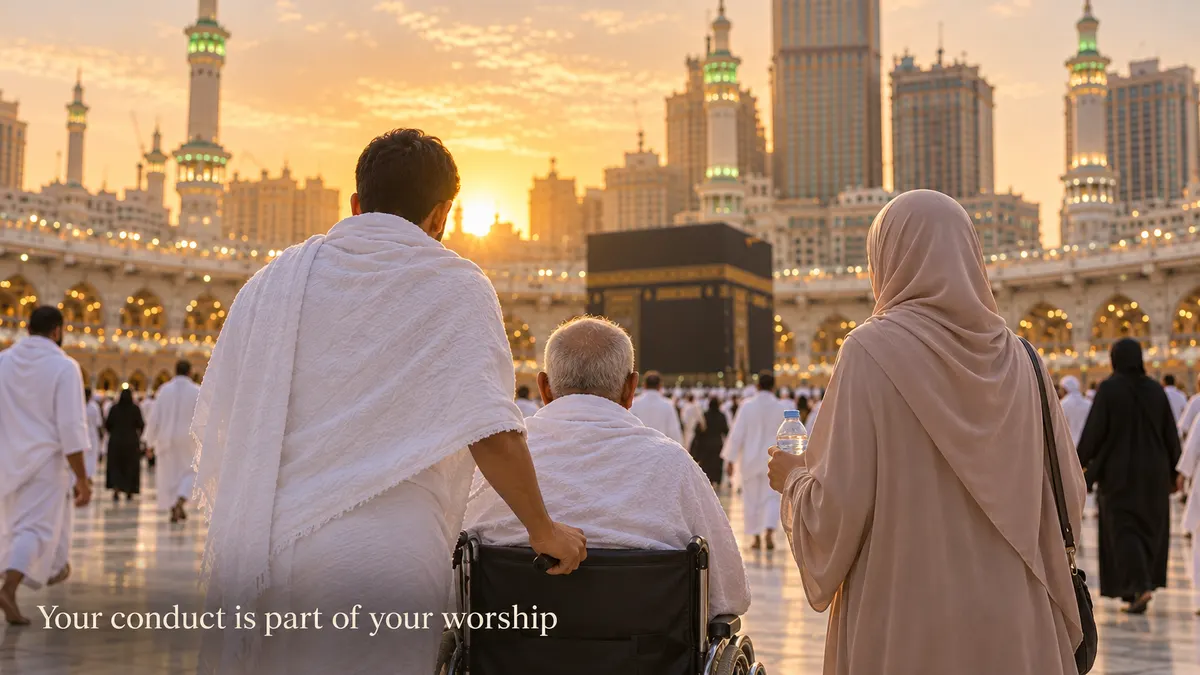
Introduction: Understanding the Meaning and Significance of Umrah
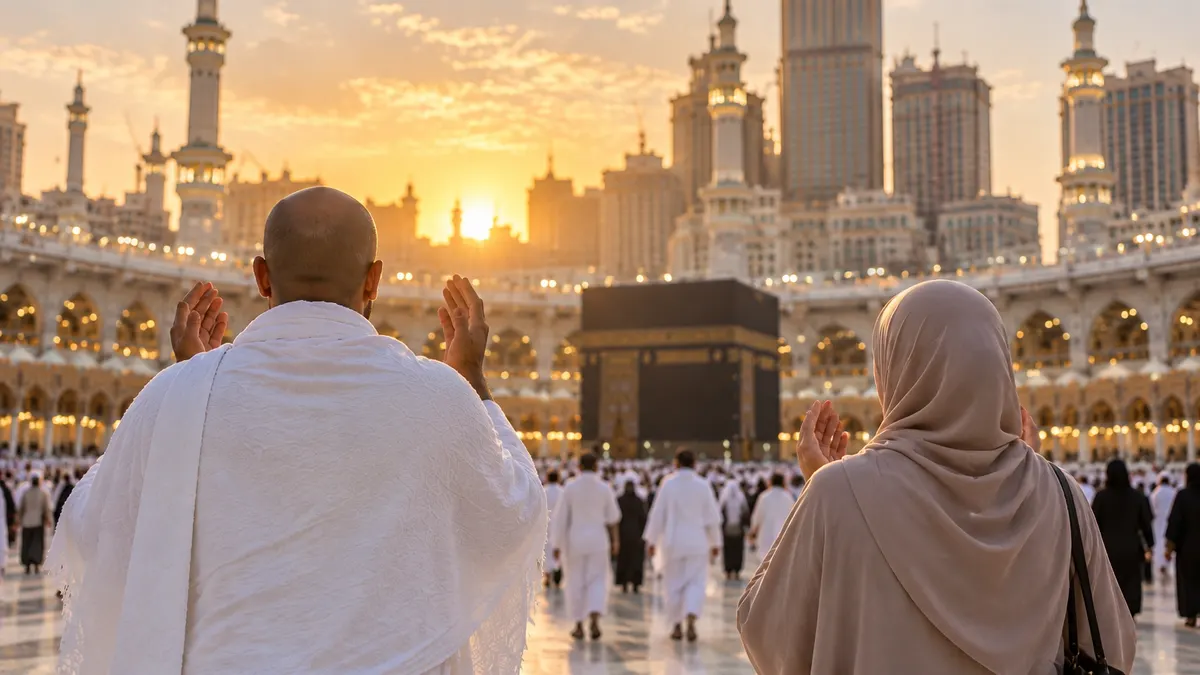
Umrah, commonly known as the lesser pilgrimage, is one of the beautiful acts of worship in Islam. It is a journey of faith, devotion, repentance, humility, and submission to Allah (SWT). Muslims from every part of the world travel to Makkah to visit the Sacred House of Allah, the Kabbah, and perform the prescribed rituals of Umrah. Unlike Hajj, which takes place during specific days of the Islamic month of Dhul-Hijjah, Umrah can generally be performed throughout the year, subject to applicable Hajj-season arrangements and Saudi regulations.
For a first-time pilgrim, however, Umrah may appear complicated. Questions naturally arise:
- Where should I begin?
- What is Ihram, and when should I enter it?
- How many times should I walk around Kabbah?
- What should I recite during the Tawaf?
- How do I perform Sa'yi between Sofa and Marwah?
- What should men and women wear?
- What mistakes should I avoid?
- How can I prepare myself spiritually?
This guide answers these questions in a simple, chronological, and evidence-based manner.
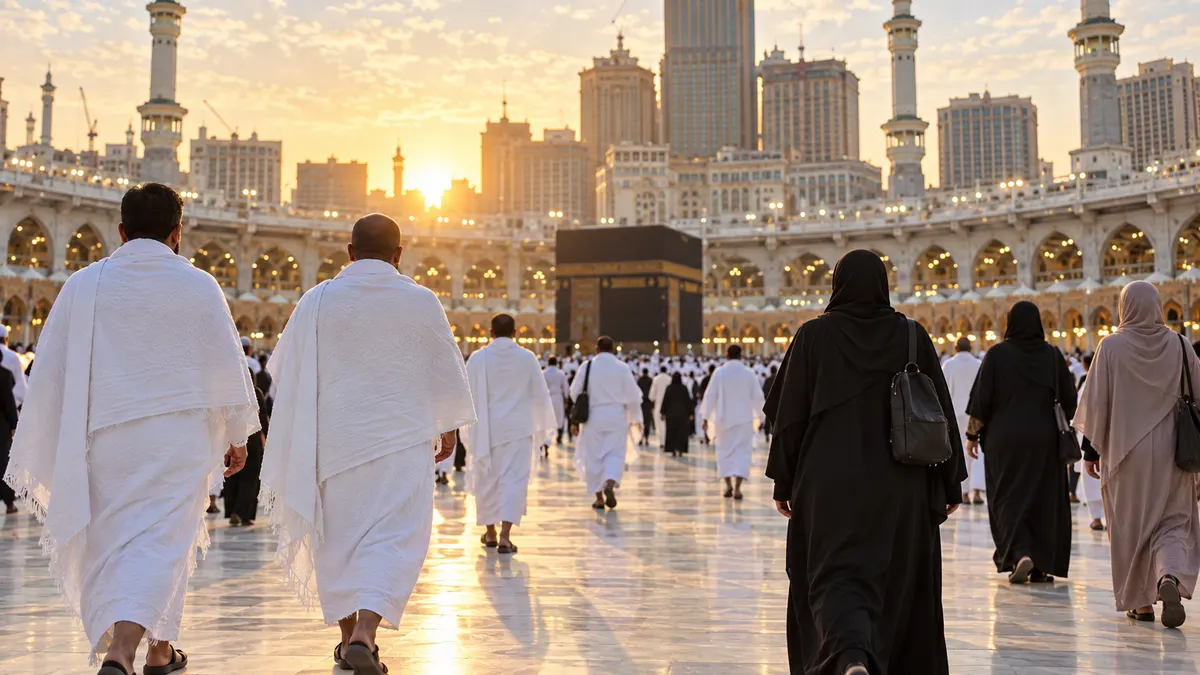
The Qur'anic foundation of Umrah
Allah Almighty commands:
Arabic:
وَأَتِمُّوا الْحَجَّ وَالْعُمْرَةَ لِلَّهِ
Translation:
"And complete the Hajj and Umrah for Allah."
Reference: Surah Al-Baqarah, 2:196.
This verse establishes the importance of completing the pilgrimage sincerely for Allah, rather than treating it as merely a journey or cultural activity.
The Prophet Muhammad (peace be upon him) also explained the spiritual virtues of pilgrimage. In an authentic narration, he said that performing one Umrah after another expiates the sins committed between them.
Reference: Sahih al-Bukhari 1773; Sahih Muslim 1349.
The central purpose of Umrah is therefore not simply to visit Makkah, but to return with a renewed relationship with Allah.
PART ONE: HOW TO PERFORM UMRAH STEP BY STEP
Umrah consists of four main practical stages:
- Entering the state of Ihram and making the intention.
- Performing Tawaf around the Kabbah.
- Performing Sa'yi between Safa and Marwah.
- Shaving or trimming the hair to complete Umrah.
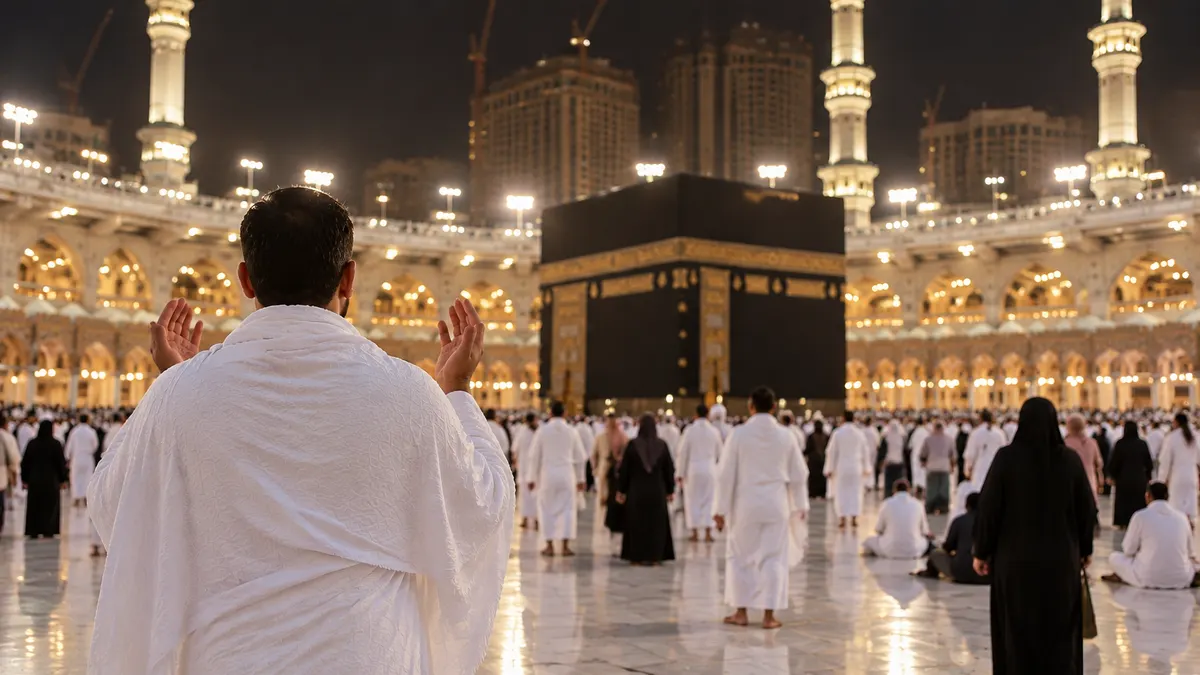
The following instructions explain each stage.
Step 1Preparing for Ihram
What is Ihram?
Ihram is a sacred state of worship that a Muslim enters with the intention of performing Umrah or Hajj. It is important to understand that Ihram is not simply a particular type of clothing. It is a religious state in which certain actions become prohibited.
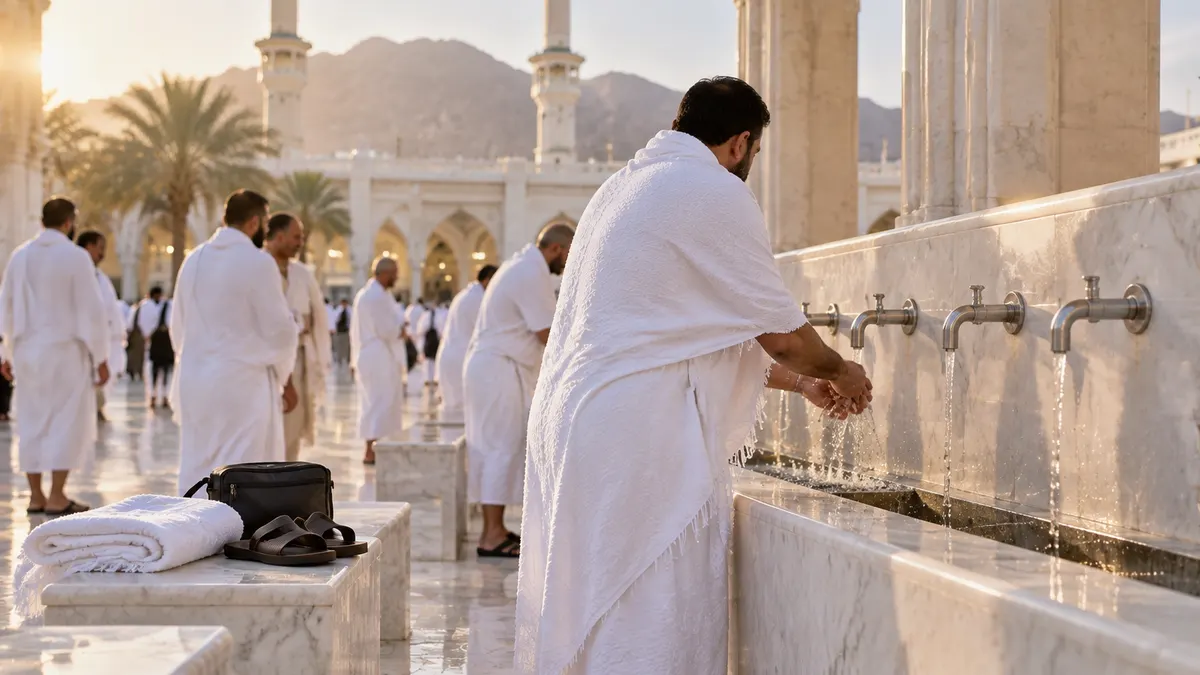
Before entering Ihram, a pilgrim should:
- Take a complete bath (Ghusl), if possible.
- Remove unwanted body hair and trim nails before entering Ihram, if needed.
- Perform ablution (Wudu).
- Men should wear the prescribed two-piece Ihram garments.
- Women should wear clean, modest Islamic clothing.
- Apply perfume to the body before entering Ihram, not to the Ihram garments.
- Prepare mentally to begin the pilgrimage with sincere intention.
Important: These preparations should be completed before crossing the Miqat. If someone has already entered Ihram, they must observe its restrictions.
What is Miqat?
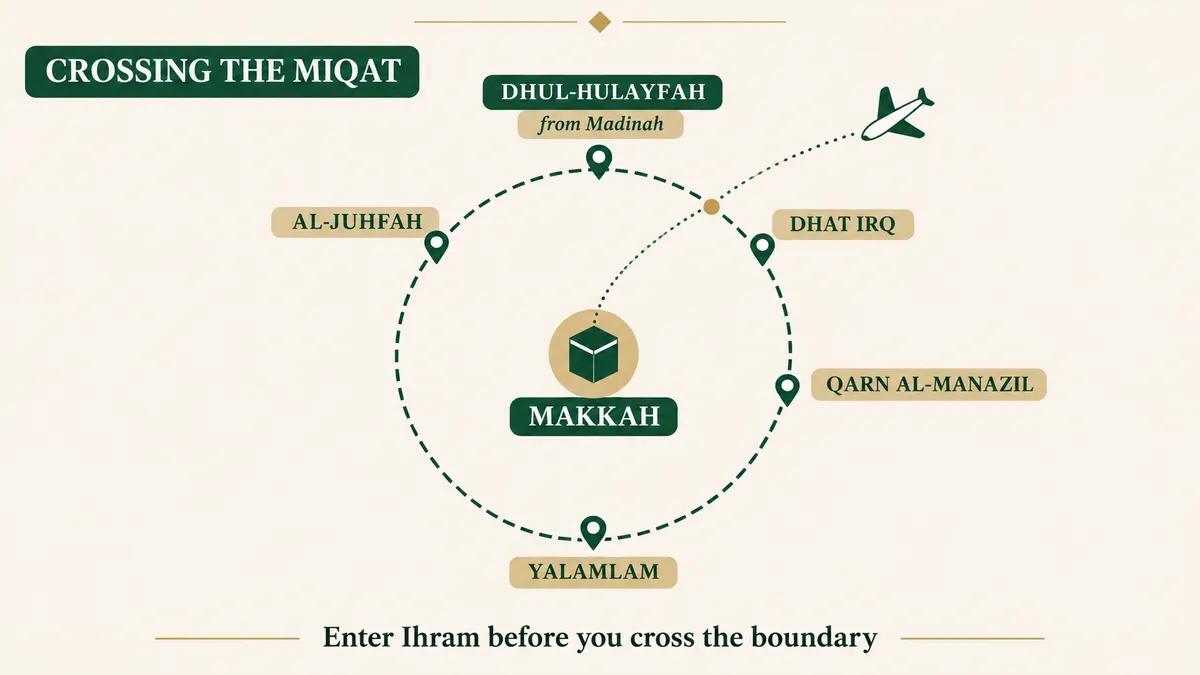
Miqat refers to the geographical boundary designated for entering Ihram.
A person intending to perform Umrah must enter Ihram before crossing the relevant Miqat.
Some well-known Miqat locations include:
- Dhul-Hulayfah (Abyar Ali), for those travelling from Madinah.
- Al-Juhfah, associated with those coming from the direction of Syria and the northwest.
- Qarn al-Manazil, for those coming from the direction of Najd.
- Yalamlam, for those coming from the direction of Yemen.
- Dhat Irq, for those coming from the direction of Iraq.
For air travellers: You do not have to wait until landing in Jeddah to enter Ihram. You should wear your Ihram garments and make the intention before the aircraft crosses the relevant Miqat. Airline announcements may help, but do not rely on them if you are unsure of the timing.
Making the intention for Umrah
The intention is fundamentally an act of the heart. You may express it verbally as follows:
Arabic:
لَبَّيْكَ اللَّهُمَّ عُمْرَةً
Transliteration:
Labbayka Allahumma 'Umrah.
Meaning:
"O Allah, here I am responding to Your call to perform Umrah."
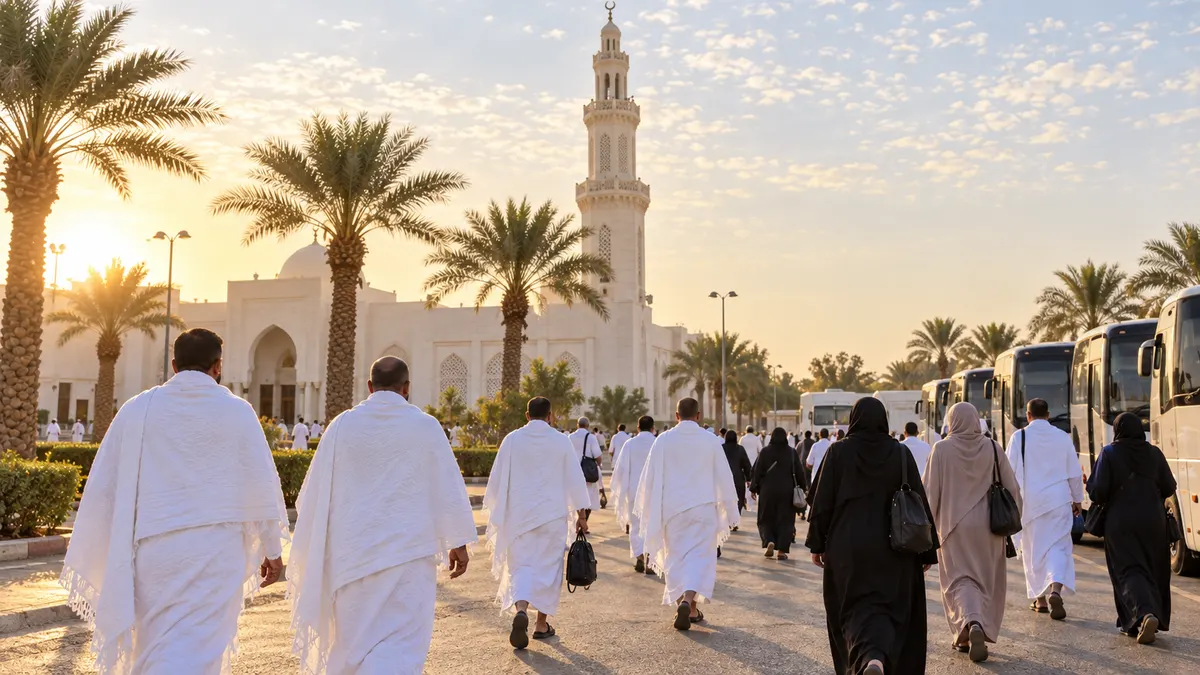
Reciting Talbiyah
Immediately after entering Ihram, begin reciting Talbiyah.
The Talbiyah
# لَبَّيْكَ اللَّهُمَّ لَبَّيْكَ، لَبَّيْكَ لَا شَرِيكَ لَكَ لَبَّيْكَ، إِنَّ الْحَمْدَ وَالنِّعْمَةَ لَكَ وَالْمُلْكَ، لَا شَرِيكَ لَكَ
Transliteration:
Labbayk Allahumma labbayk. Labbayka la sharika laka labbayk. Innal-hamda wan-ni'mata laka wal-mulk, la sharika lak.
Meaning:
"Here I am, O Allah, here I am. Here I am, you have no partner, here I am. Indeed, all praise, blessings and sovereignty belong to You. You have no partner."
Reference: Sahih al-Bukhari 1549; Sahih Muslim 1184.
Men generally recite Talbiyah aloud, while women recite it quietly at a level appropriate to their circumstances.
Continue reciting it during the journey until you begin Tawaf.
Restrictions after entering Ihram
Once you enter Ihram, avoid:
- Cutting or removing hair.
- Cutting nails.
- Applying perfume.
- Sexual relations and associated intimate conduct.
- Hunting land animals.
- Men wearing ordinary fitted garments tailored to body parts, such as shirts and trousers, and covering the head with an attached covering.
- Women wearing a fitted niqab or gloves during Ihram, according to the relevant prophetic instruction.
There are additional detailed rules and exceptions, so consult a qualified scholar if a particular situation arises.
Step 2Entering Masjid al-Haram
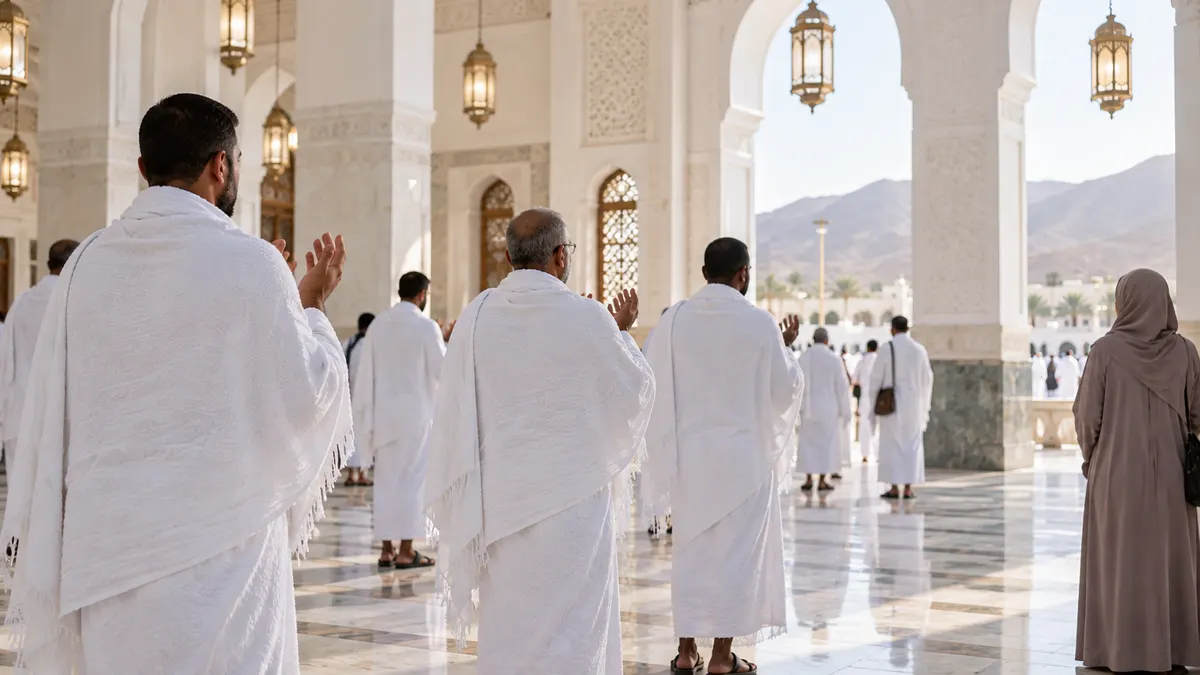
Upon arriving at Masjid al-Haram:
- Enter with your right foot.
- Recite the established supplication for entering a mosque.
- Maintain humility and remember that you are entering one of the most sacred places in Islam.
- Proceed towards the Ka'bah without pushing or disturbing other worshippers.
A commonly recited mosque-entry supplication is:
اللَّهُمَّ افْتَحْ لِي أَبْوَابَ رَحْمَتِكَ
Allahumma iftah li abwaba rahmatik.
"O Allah, open for me the gates of Your mercy."
Reference: Sahih Muslim 713.
When you first see the Kabbah, you may make personal supplications to Allah. There is no authenticated compulsory special prayer that must be recited upon seeing it.
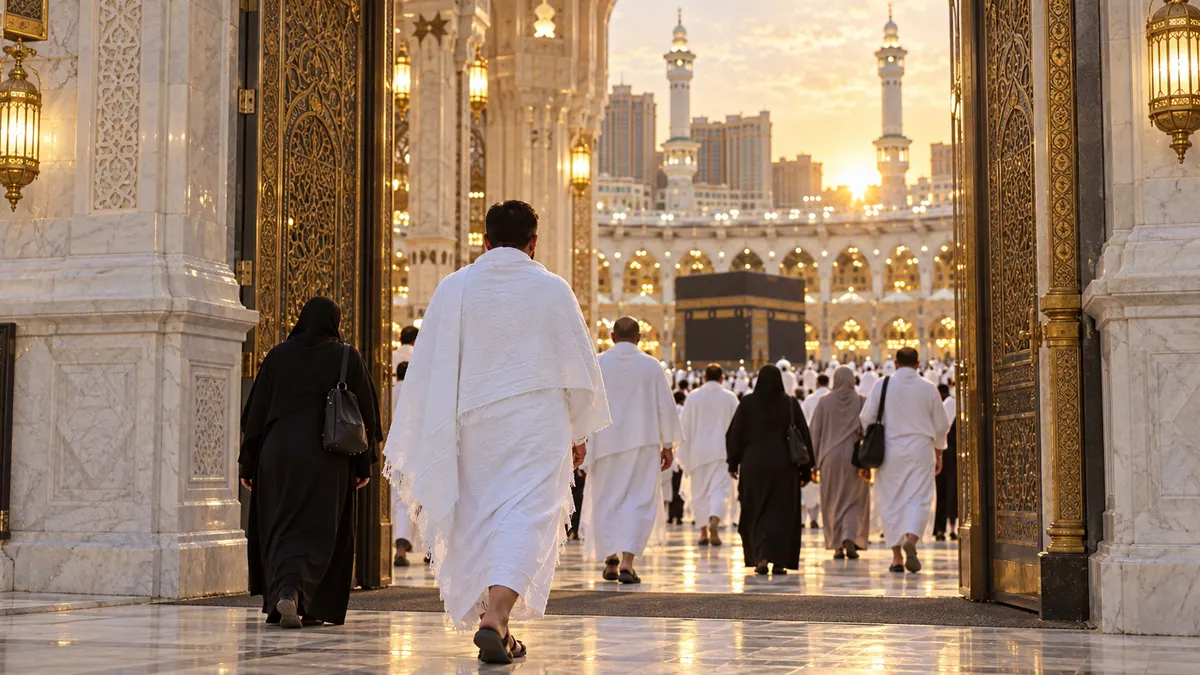
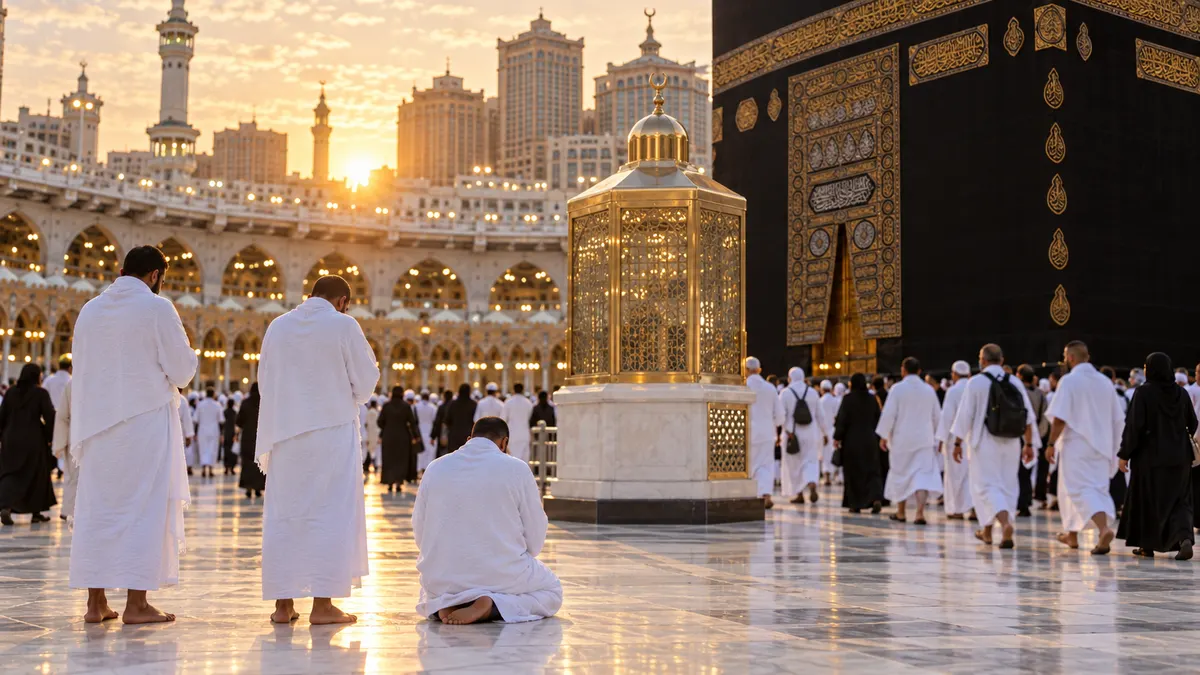
Step 3Performing Tawaf
What is Tawaf?
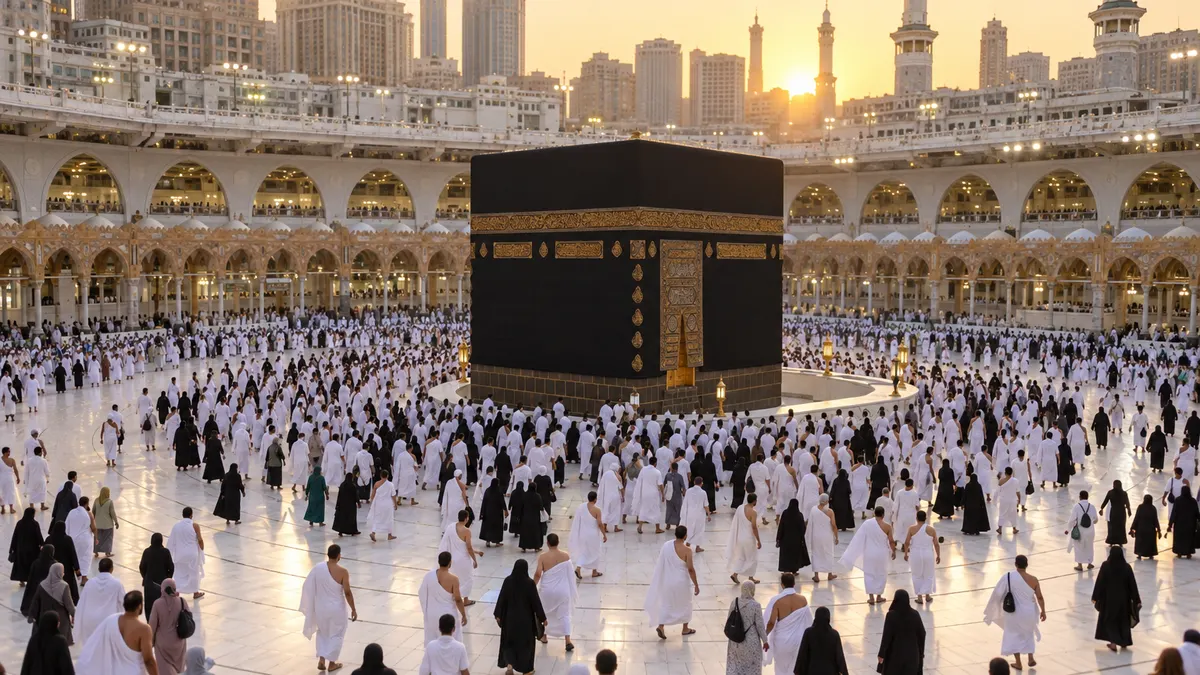
Tawaf means circumambulating the Kabbah seven times in an anticlockwise direction.
It is one of the principal rituals of Umrah.
How to perform Tawaf
1\. Begin at the Black Stone (Hajar al-Aswad).
Stand in alignment with the Black Stone, keeping the Ka'bah on your left.
2\. Begin your first round.
If possible, approach the Black Stone without causing inconvenience to others.
If you cannot reach it, face its direction, raise your right hand and say:
اللَّهُ أَكْبَرُ
Allahu Akbar.
You do not need to touch or kiss it.
3\. Walk around the Ka'bah.
Proceed anticlockwise, keeping the Ka'bah on your left.
4\. Complete seven rounds.
Each complete circuit from the Black Stone back to the Black Stone counts as one round.
5\. Make personal supplications.
You may recite Qur'an, perform Dhikr, ask Allah for forgiveness, or make personal prayers in any language you understand.
What should you recite during Tawaf?
There is no obligatory separate supplication for each of the seven rounds.
However, between the Yemeni Corner (Rukn al-Yamani) and the Black Stone, the following Qur'anic supplication is established in the Sunnah:
رَبَّنَا آتِنَا فِي الدُّنْيَا حَسَنَةً وَفِي الْآخِرَةِ حَسَنَةً وَقِنَا عَذَابَ النَّارِ
Transliteration:
Rabbana atina fid-dunya hasanatan wa fil-akhirati hasanatan wa qina adhaban-nar.
Meaning:
"Our Lord, grant us good in this world and good in the Hereafter and protect us from the punishment of the Fire."
Reference: Surah Al-Baqarah, 2:201; Sunan Abi Dawud 1892.
Special Sunnah practices for men during Tawaf
Two practices are particularly associated with men:
- Idtiba: Exposing the right shoulder by placing the upper Ihram garment beneath the right arm and over the left shoulder.
- Ramal: Walking briskly with short steps during the first three rounds, when conditions permit.
These are Sunnah practices, not compulsory requirements. They must never be performed in a way that harms or inconveniences other pilgrims.
Women perform Tawaf normally, without Idtiba or Ramal.
Step 4Praying Two Rak'ahs After Tawaf
After completing seven rounds:
- Cover the right shoulder if you are a man who performed Idtiba.
- Proceed towards Maqam Ibrahim.
- Pray two Rak'ahs if possible.
- If the area is crowded, pray elsewhere in the mosque.
Allah says:
وَاتَّخِذُوا مِن مَّقَامِ إِبْرَاهِيمَ مُصَلًّى
"And take the standing place of Ibrahim as a place of prayer."
Reference: Surah Al-Baqarah, 2:125.
It is Sunnah to recite Surah Al-Kafirun in the first Rak'ah and Surah Al-Ikhlas in the second, as reported in Sahih Muslim 1218.
Do not insist on praying immediately behind Maqam Ibrahim if doing so obstructs people performing Tawaf.
Drinking Zamzam water
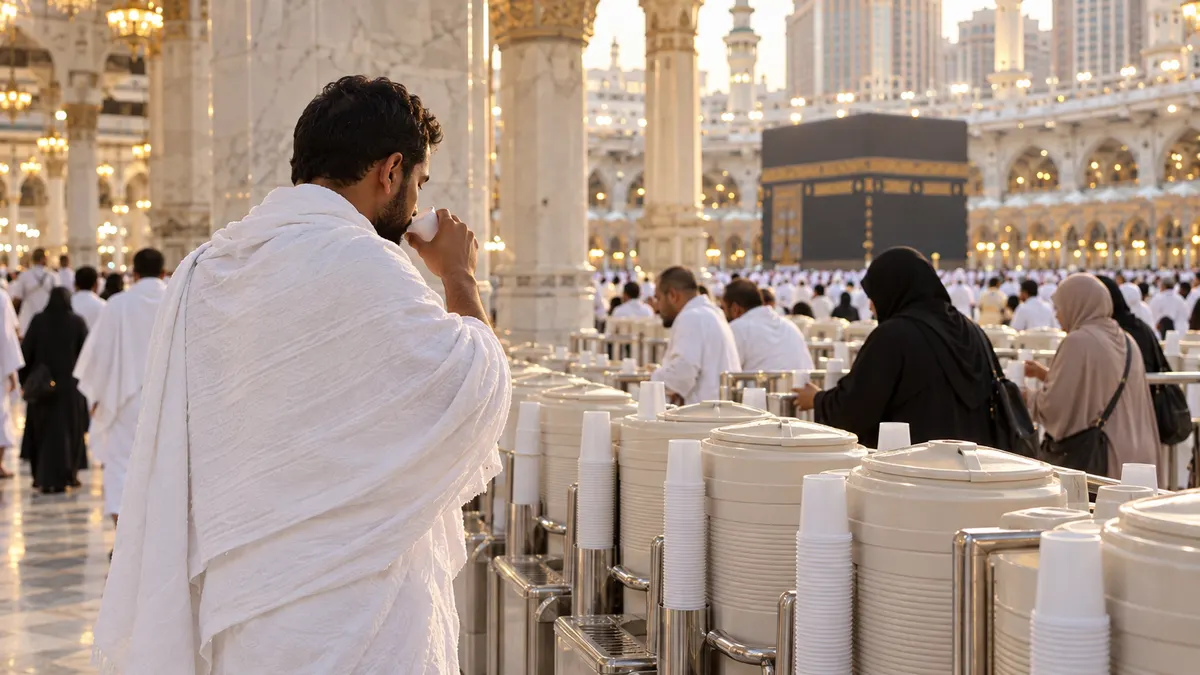
After Tawaf, drinking Zamzam water is recommended.
The Prophet (peace be upon him) drank Zamzam water, and authentic narrations establish its special blessing.
You may make sincere supplications while drinking it, asking Allah for health, forgiveness, guidance, and beneficial knowledge.
Reference: Sahih Muslim 2473; Jami' at-Tirmidhi 963.
Step 5Performing Sa'yi Between Safa and Marwah
What is Say'i?
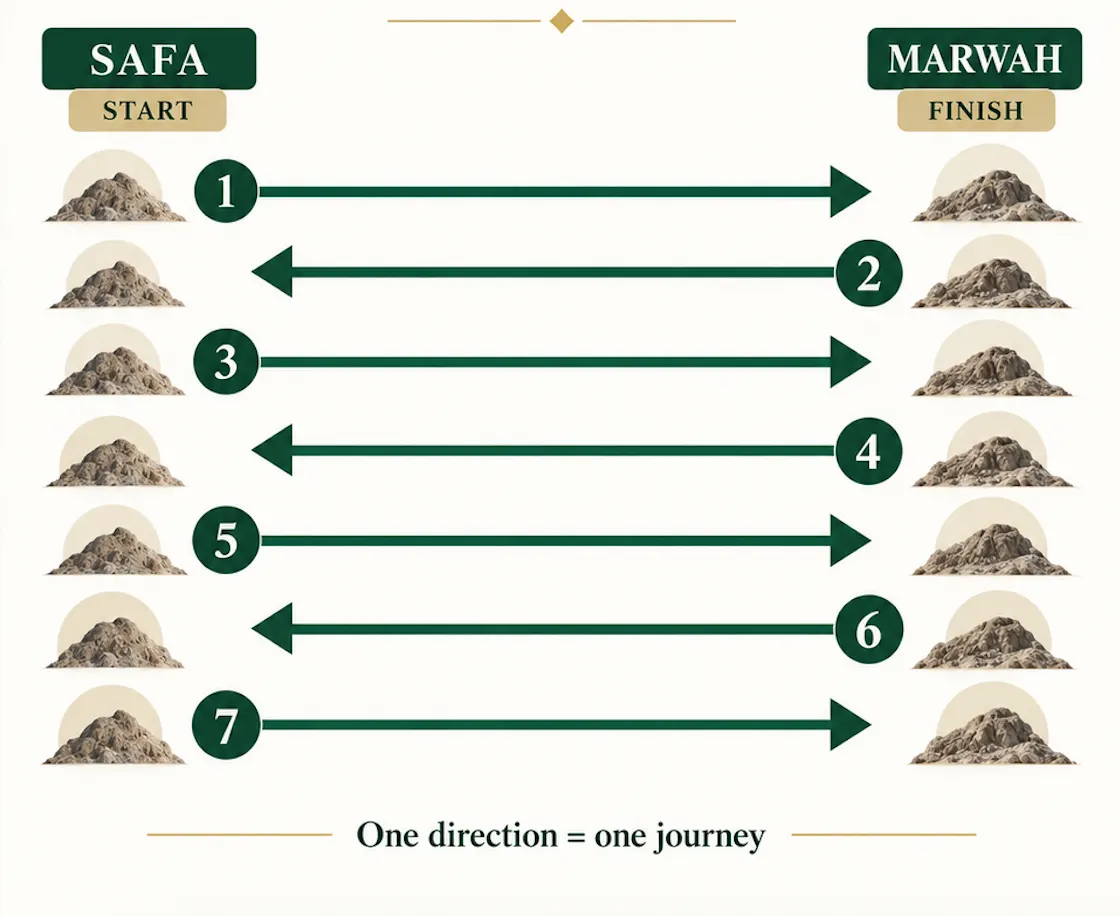
Sa'i is the act of walking seven times between the two sacred locations of Safa and Marwah, situated inside Masjid al-Haram. This ritual commemorates the remarkable faith, patience and perseverance of Hajar (may Allah be pleased with her), the wife of Prophet Ibrahim (peace be upon him), when she searched for water for her infant son, Ismail (peace be upon him).
Her trust in Allah and her determination became an everlasting example for Muslims.
Qur'anic evidence
Allah Almighty says:
إِنَّ الصَّفَا وَالْمَرْوَةَ مِن شَعَائِرِ اللَّهِ
"Indeed, Safa and Marwah are among the symbols of Allah."
Reference: Surah Al-Baqarah, 2:158.
How to perform Sa'i
1\. Begin at Safa.
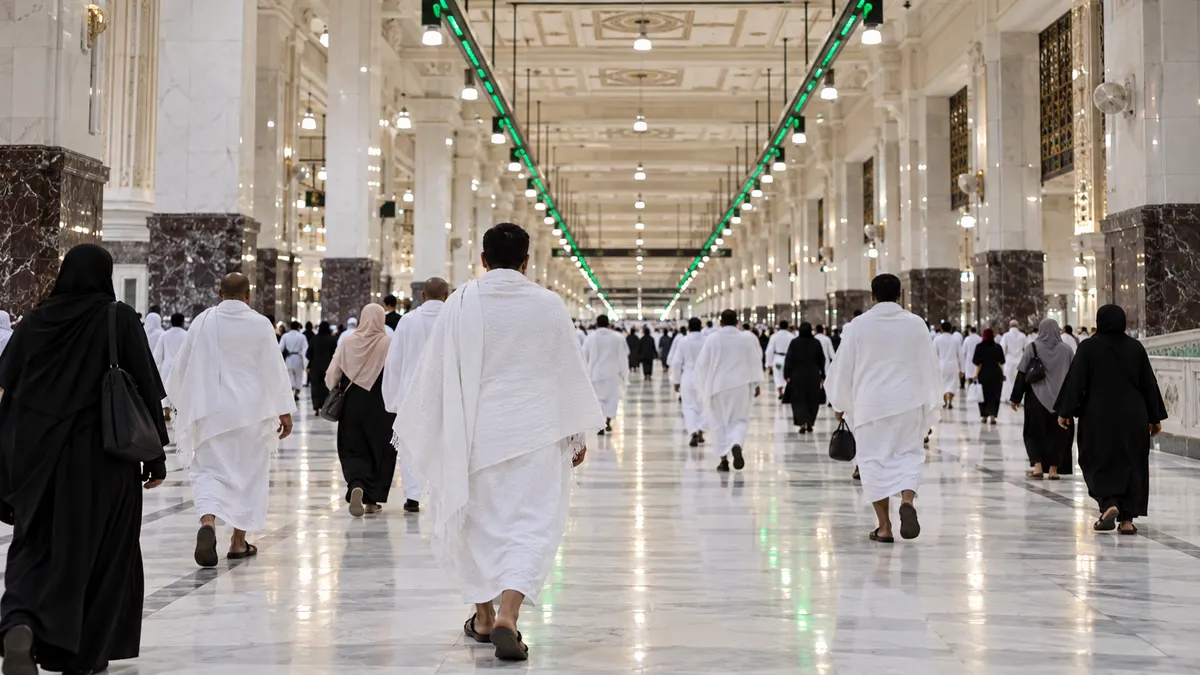
After completing Tawaf and the two Rak'ahs, proceed towards the Sa'i area.
Start at Safa, not Marwah.
2\. Face the direction of the Ka'bah.
At Safa, recite the Qur'anic verse concerning Safa and Marwah, and say:
أَبْدَأُ بِمَا بَدَأَ اللَّهُ بِهِ
Abda'u bima bada'allahu bihi.
"I begin with that with which Allah began."
This wording is reported in the authentic narration describing the Prophet's Sa'i.
3\. Make Dhikr and supplication.
Face the Ka'bah and praise Allah, declare His greatness and make personal supplications.
The Prophet (peace be upon him) praised Allah and made supplications at Safa and Marwah.
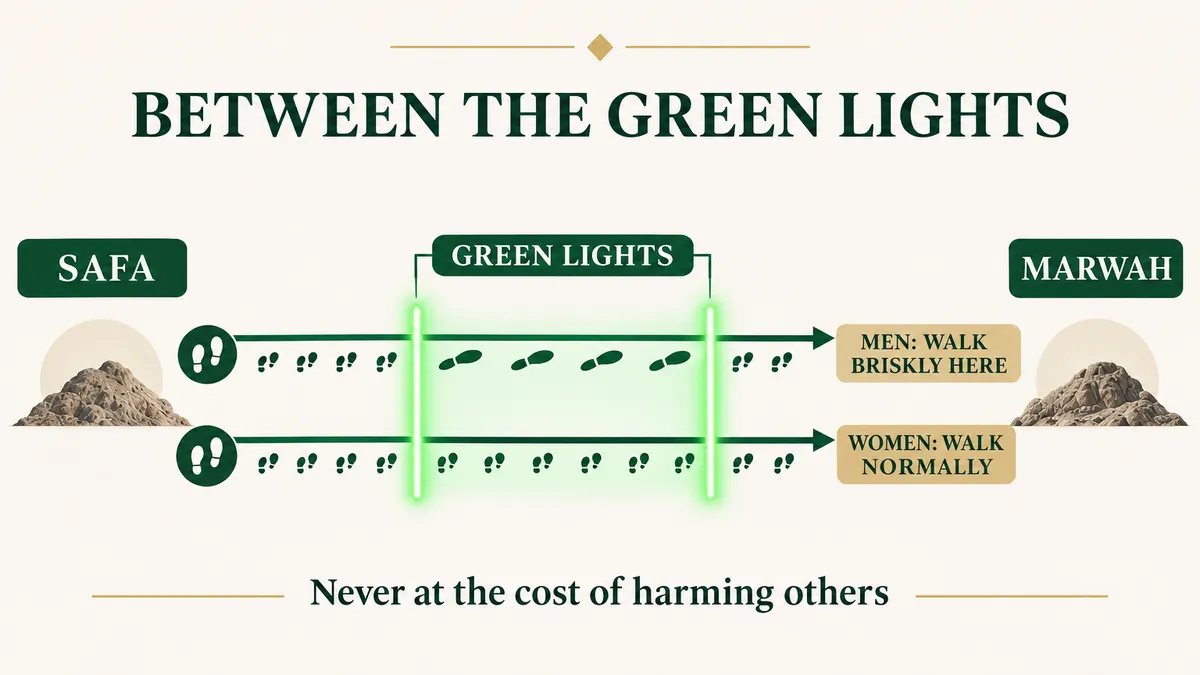
4\. Walk towards Marwah.
Walk normally between Safa and Marwah.
Men should jog or walk briskly in the marked section between the two green lights, provided it is safe and does not disturb others.
Women walk normally throughout.
5\. Reach Marwah.
When you reach Marwah, one journey has been completed.
6\. Return to Safa.
Walk back towards Safa. This completes the second journey.
7\. Continue until seven journeys are completed.
What should you recite during Sa'i?
You are not required to recite a particular supplication for every journey.
You may:
- Recite the Qur'an.
- Say SubhanAllah, Alhamdulillah, and Allahu Akbar.
- Ask Allah forgiveness.
- Make Dua for your parents and family.
- Ask Allah for guidance, health, protection, and success.
- Pray for the Muslim Ummah.
The Prophet's practice of praising Allah and making supplication at Safa and Marwah is described by Jabir ibn Abdullah in Sahih Muslim 1218.
Step 6Shaving or Trimming the Hair (Tahallul)
This is the final stage of Umrah.
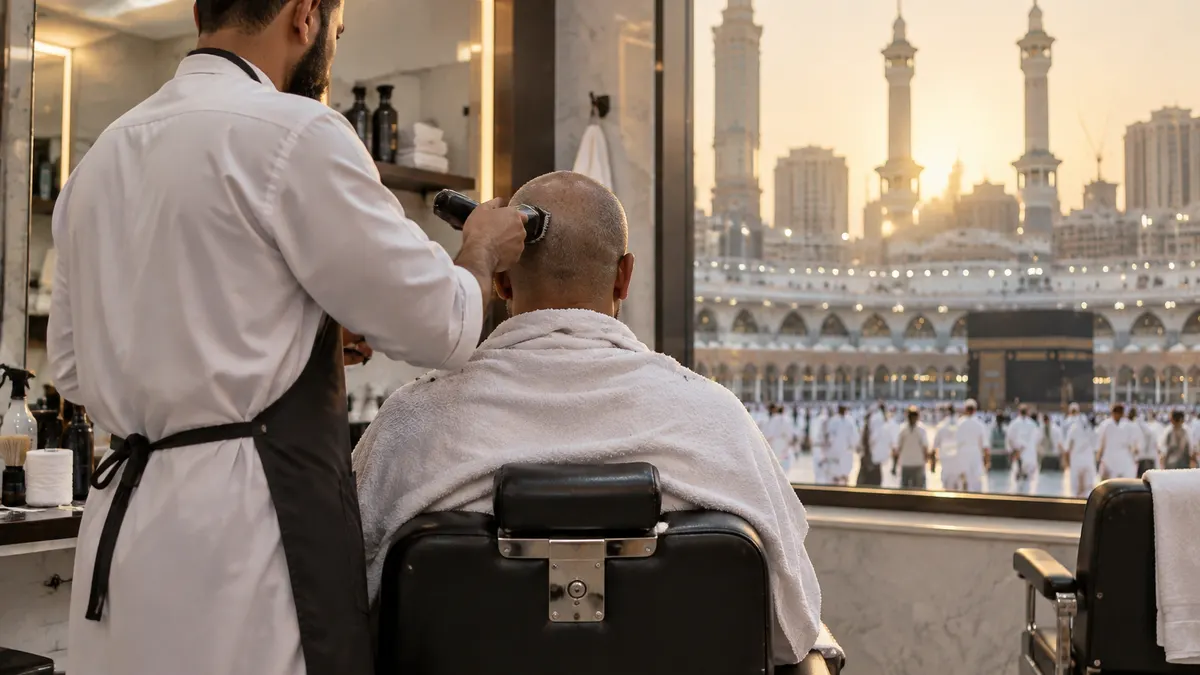
After completing seven journeys of Sa'i, the pilgrim must shave or trim the hair to leave the state of Ihram.
For men
Men have two options:
- Shave the entire head (Halq).
- Shorten the hair (Taqsir).
Shaving the head is generally considered more virtuous for men, as the Prophet (peace be upon him) prayed for those who shaved their heads.
Reference: Sahih al-Bukhari 1727; Sahih Muslim 1301.
For women
Women should cut a small portion, approximately 1–2 centimeters, from the ends of their hair.
Women do not shave their heads.
They may gather their hair and trim the ends modestly.
When is Umrah completed?
When the pilgrim has completed the required rituals and shaved or trimmed the hair, the Umrah is complete. The restrictions of Ihram are lifted, and the pilgrim may return to ordinary permissible clothing and activities.
Umrah completed
May Allah accept your Umrah, forgive your sins, and grant you a spiritually renewed life. Ameen.
ALLAH ALMIGHTY KNOWS BEST.
10 COMMON MISTAKES TO AVOID DURING UMRAH
Although Umrah is a beautiful act of worship, many first-time pilgrims unintentionally make mistakes because they are unfamiliar with its rules.
The following are ten common mistakes and how to avoid them.
1\. Crossing the Miqat without entering Ihram
The mistake: Some pilgrims travel towards Makkah without entering Ihram at the designated Miqat.
Why is it problematic?
The Miqat is the prescribed boundary for those intending to perform Umrah.
How to avoid it: Learn the relevant Miqat before departure. Air travelers should enter Ihram before crossing it.
2\. Believing that Ihram is only clothing
The mistake: Some people believe that wearing two white garments automatically means they have entered the Ihram.
Correction: Ihram is a state of worship entered through intention, accompanied by Talbiyah and its associated rulings.
How to avoid it: Understand the difference between Ihram clothing and the actual state of Ihram.
3\. Pushing people to kiss the Black Stone
The mistake: Some pilgrims push, struggle, or hurt others to touch or kiss the Black Stone.
Why is it wrong?
An act of worship should not become a source of harm to other Muslims.
Umar ibn al-Khattab (may Allah be pleased with him) said to the Black Stone that he knew it was only a stone which could neither harm nor benefit, and that he would not have kissed it had he not seen the Prophet do so.
Reference: Sahih al-Bukhari 1597.
How to avoid it: If you cannot reach it safely, simply gesture towards it and say Allahu Akbar.
4\. Believing that every round of Tawaf has a compulsory special Dua
The mistake: Some pilgrims carry books containing seven different supplications and believe they must recite each one in a particular round.
Correction: There is no authentic requirement to recite a different fixed supplication for each circuit.
How to avoid it: Make sincere personal Dua, recite Qur'an and remember Allah.
5\. Forgetting the correct number of Tawaf rounds
The mistake: Some pilgrims lose count because they are distracted by conversations, photography or group activities.
Correction: Tawaf
consists of seven complete circuits.
How to avoid it: Count carefully. If uncertain, follow the applicable scholarly guidance for resolving doubt.
6\. Performing Sa'i incorrectly
The mistake: Some people begin at Marwah or count the return journey incorrectly.
Correction: Sa'i begins at Safa and finishes at Marwah after seven journeys.
How to avoid it: Remember that Safa to Marwah is one journey, and Marwah to Safa is another.
7\. Believing that women must jog between the green lights
The mistake: Some women imitate men by jogging in the marked section.
Correction: Women walk normally throughout Sa'i. The brisk walking or jogging practice in this section applies to men.
How to avoid it: Follow the prescribed practice for women.
8\. Neglecting the restrictions of Ihram
The mistake: Some pilgrims apply perfume, cut their nails, remove hair or engage in prohibited activities after entering Ihram.
Correction: Ihram has specific restrictions that must be observed.
How to avoid it: Study these restrictions before departure and ask a knowledgeable scholar about any accidental violation. Different violations have different rulings and consequences.
9\. Taking photographs excessively during the rituals
The mistake: Some pilgrims spend more time taking photographs and recording videos than engaging in worship.
Why should it be avoided?
- It can distract you from your concentration.
- It can obstruct other pilgrims.
- It may expose other people's privacy.
- It can create unnecessary congestion.
How to avoid it: Give priority worship, remembrance, and supplication. Follow mosque photography rules.
10\. Leaving without shaving or trimming the hair
The mistake: Some pilgrims believe that completing Sa'i automatically completes Umrah.
Correction: Shaving or trimming the hair is required to complete the process of exiting Ihram.
How to avoid it: Arrange a safe, hygienic haircut after completing Sa'i and before treating the Ihram restrictions as lifted.
Additional mistakes worth remembering
- Raising the voice excessively during collective Dua.
- Pushing elderly people and women in crowded areas.
- Believing that touching the Kabbah or its covering is compulsory.
- Treating every local custom as a Sunnah.
- Neglecting physical health, hydration, and rest.
- Arguing with fellow pilgrims over minor matters.
An important Islamic principle: Allah does not require a pilgrim to harm another person in pursuit of a recommended act. Protecting the rights and safety of fellow Muslims is part of good Islamic conduct.
ALLAH ALMIGHTY KNOWS BEST