
Before beginning Hajj or Umrah, every Muslim needs to understand an important part of the pilgrimage: Ihram. It is not simply about wearing white clothes. It is a sacred state of worship that requires intention, preparation and following specific rules.
Whether you are preparing for your first Umrah or getting ready for Hajj, knowing the Ihram rules beforehand can help you avoid common mistakes and focus on your spiritual journey.
What Is Ihram?
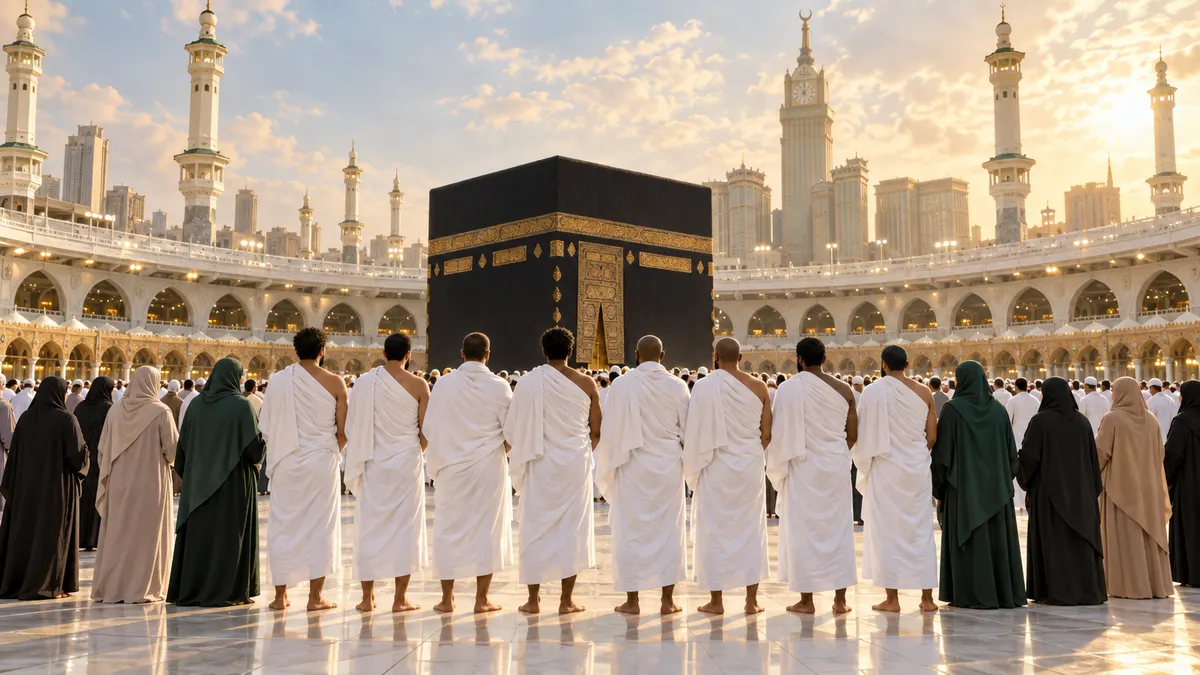
Ihram is the sacred state a Muslim enters before performing Hajj or Umrah. It begins with the intention to perform the pilgrimage and involves following certain restrictions.
Ihram reminds Muslims of humility, equality and devotion to Allah. During this time, pilgrims are expected to be patient, avoid arguments and focus on worship.
What Should You Wear During Ihram?
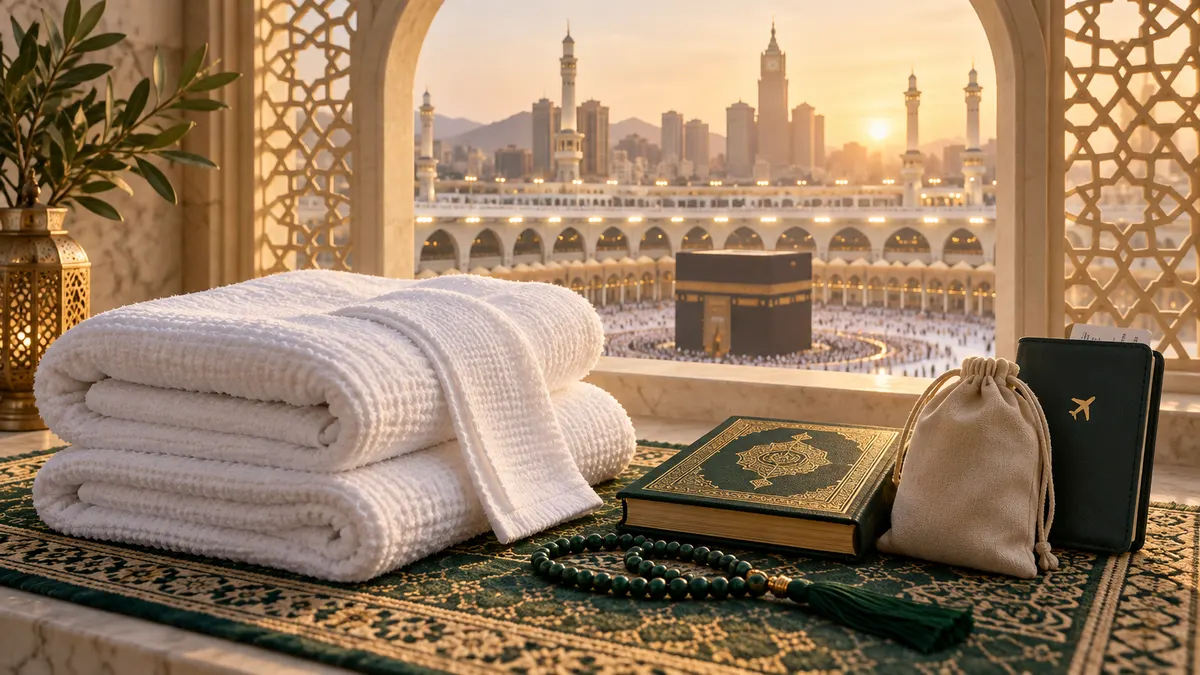
The clothing requirements for men and women are different.
For men: Men wear two simple, unstitched pieces of cloth:
- Izar: Wrapped around the waist to cover the lower body.
- Rida: Placed over the upper body.
Men must avoid ordinary fitted clothing, such as shirts, trousers, underwear and socks, while in Ihram.
For women: Women can wear their usual modest Islamic clothing. There is no specific colour or uniform required for women's Ihram. They should avoid gloves and a fitted niqab while in Ihram, following the relevant Islamic rulings.
How to Enter the State of Ihram
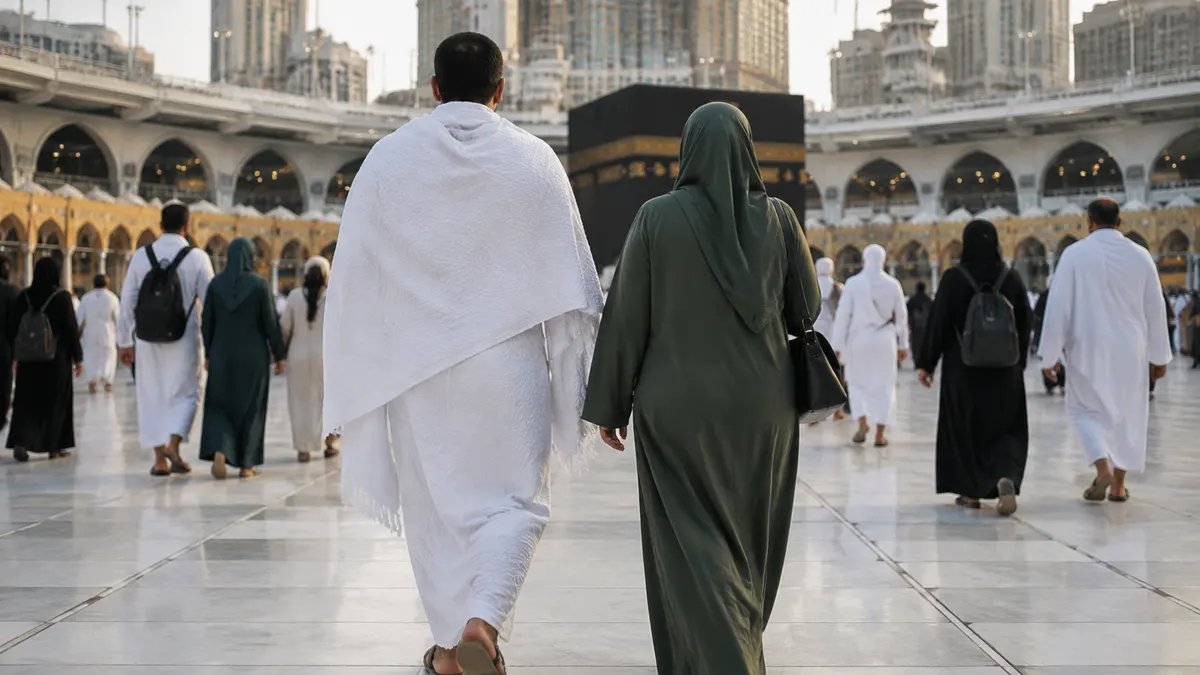
Before entering Ihram, pilgrims are encouraged to prepare themselves by following these recommended practices:
- Perform Ghusl: Take a full ritual bath before entering Ihram, if possible.
- Prepare yourself: Trim your nails and remove unwanted body hair beforehand, if needed.
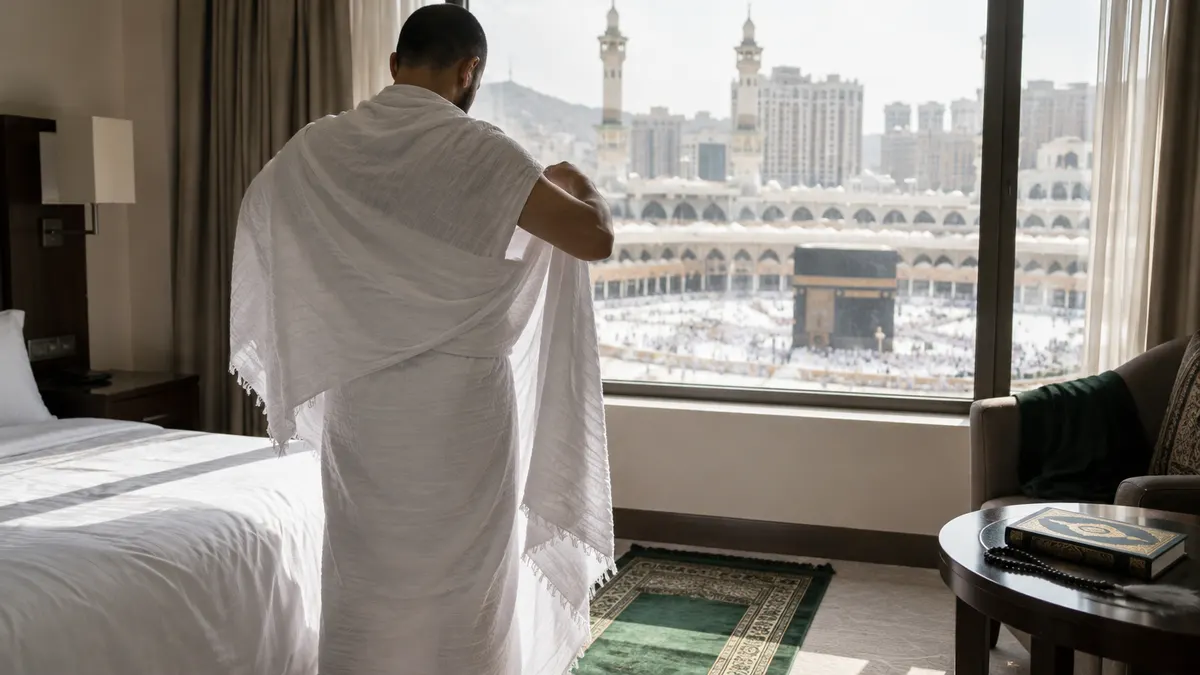
- Wear Ihram clothing: Put on the appropriate clothing for your pilgrimage.
- Make the intention: Make a sincere intention in your heart to perform Hajj or Umrah.
- Recite the Talbiyah: Begin reciting the Talbiyah after making your intention.
The Talbiyah begins with:
لَبَّيْكَ اللَّهُمَّ لَبَّيْكَ
Labbayk Allahumma labbayk.
Meaning: "Here I am, O Allah, here I am."
Understanding Miqat: Where Must You Enter Ihram?
Miqat refers to the designated boundaries that pilgrims must not cross without entering Ihram when they intend to perform Hajj or Umrah.
There are five main Miqat locations:
- Dhul-Hulayfah: For pilgrims travelling from Madinah and its direction.
- Al-Juhfah: For pilgrims coming from the direction of Syria, Egypt and North Africa.
- Qarn al-Manazil: For pilgrims coming from the direction of Najd.
- Yalamlam: For pilgrims coming from the direction of Yemen.
- Dhat Irq: For pilgrims coming from the direction of Iraq.
If you are travelling by air, prepare your Ihram clothing before reaching the Miqat and make your intention at or before crossing it.

What Is Not Allowed During Ihram?
Once you enter Ihram, certain actions become prohibited. Every pilgrim should understand these restrictions before travelling.
1Cutting Hair and Nails
Do not deliberately cut or remove hair from the body or trim your nails while in Ihram.
2Using Perfume
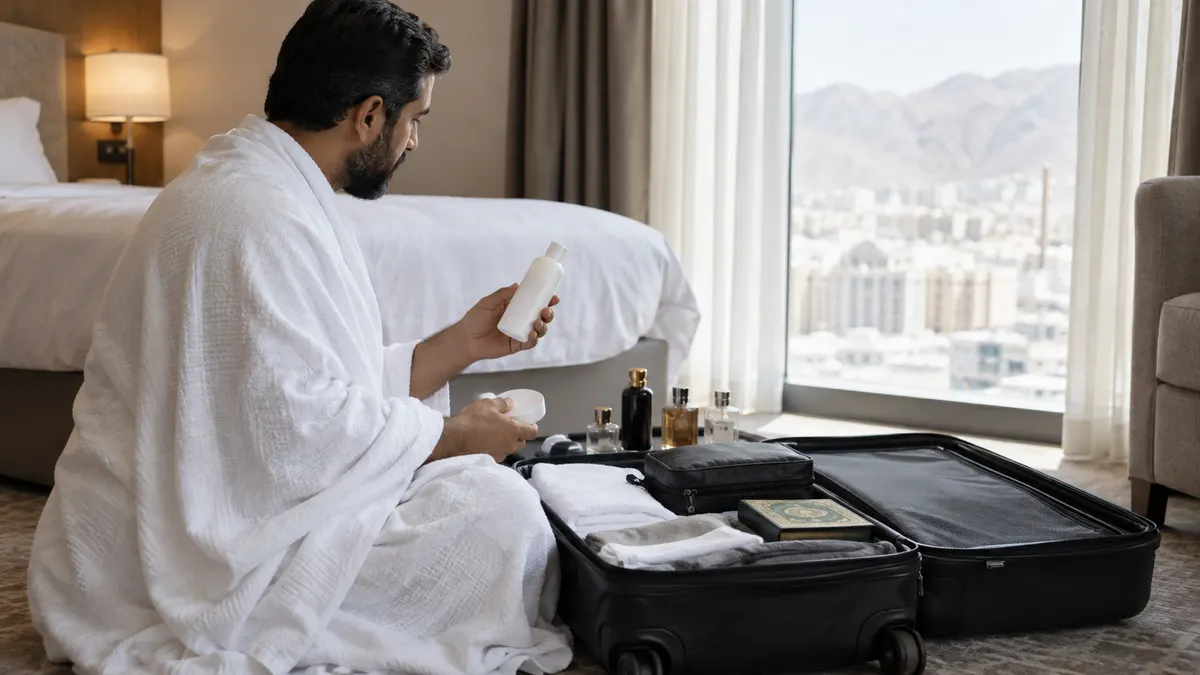
Avoid perfumes, scented lotions, body sprays and other fragranced products after entering Ihram.
3Wearing Prohibited Clothing
Men must avoid ordinary fitted clothing and covering their heads with items such as caps. Women should follow the specific clothing restrictions applicable to them.
4Hunting Animals
Hunting or killing wild land animals is prohibited during Ihram.
5Marital Relations
Sexual relations and sexual activity are prohibited while in Ihram.
6Arguments and Bad Behaviour
Pilgrims should avoid fighting, insults, unnecessary arguments and hurting others.
Allah reminds pilgrims in the Qur'an:
"There is to be no sexual relations and no disobedience and no disputing during Hajj."
Surah Al-Baqarah 2:197
This verse highlights the importance of good behaviour, patience and self-control during pilgrimage.
Common Ihram Mistakes to Avoid
Even a small misunderstanding can create confusion during Hajj or Umrah. Here are some common mistakes pilgrims should be aware of:
- Thinking Ihram only means wearing white: Ihram is a sacred state that begins with intention, not simply by changing clothes.
- Crossing the Miqat without entering Ihram: Pilgrims intending to perform Hajj or Umrah must enter Ihram before crossing their relevant Miqat.
- Using scented products: Always check your toiletries and choose unscented alternatives.
- Believing women must wear white: Women can wear modest clothing in different colours.
- Assuming every mistake invalidates Umrah: Different violations have different rulings. Some may require compensation, while others may not.
When Can You Leave Ihram?
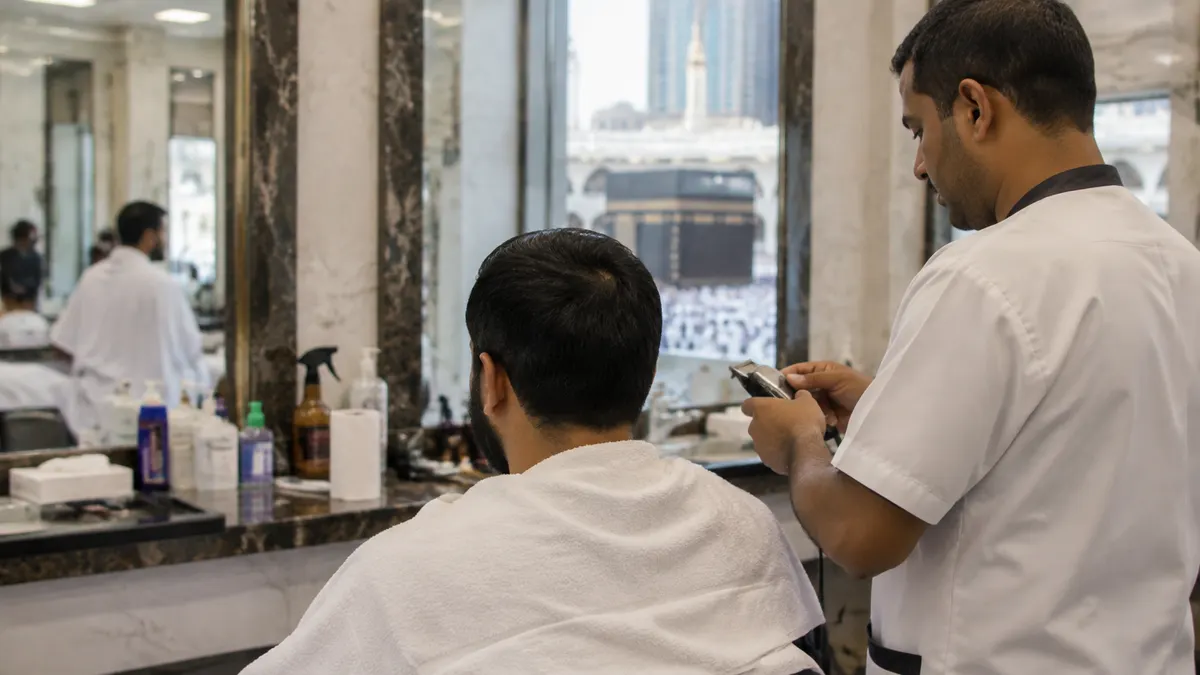
Leaving Ihram is known as Tahallul. After completing Tawaf and Sa'i during Umrah, pilgrims leave Ihram by shaving or trimming their hair.
- Men: Shaving the entire head is preferred, although trimming is also permitted.
- Women: Cut a small amount from the ends of their hair. Women do not shave their heads.
During Hajj, leaving Ihram involves additional rites and specific timings, so pilgrims should follow reliable scholarly guidance.
Begin Your Pilgrimage with Knowledge and Preparation
Ihram is more than a set of clothing rules. It is a reminder to approach Allah with humility, patience and sincerity.
Before travelling to Makkah, take time to learn the Ihram rules, understand the restrictions and prepare everything you need. Being well-informed can help you avoid unnecessary mistakes and give your attention to what truly matters: your worship and your connection with Allah.
May Allah make every pilgrim's journey easy and accept their Hajj and Umrah. Ameen.